
New therapies couldn’t exist without patients who are willing to participate in a clinical trial and subject themselves to lots of extra tests and procedures in order to contribute to scientific understanding. The results of those trials end up in research papers — pages of dense text and data that can take a layperson hours to decipher.
Clinical research articles are written that way for good reason: to communicate methods and findings to scientific peers, in a nuanced and reproducible way and as building blocks for future research.
But in this form, it also means the research is largely inaccessible to the general public — and by extension, to the very patients who participated in the clinical trial and make the science possible.
But why does this matter?
Returning trial results to patients is a movement to address this shortcoming by sharing trial data — at a summary or individualized level — back to participants, in formats they can easily understand. Not only is returning trial results the right thing to do for participants, but sharing results:
- Fosters participation, retention, and engagement in research
- Gives patients the data they expect, value, and have a right to
- Builds trust in science and researchers
- Helps patients grasp their contribution to medical progress.
The growing global trend
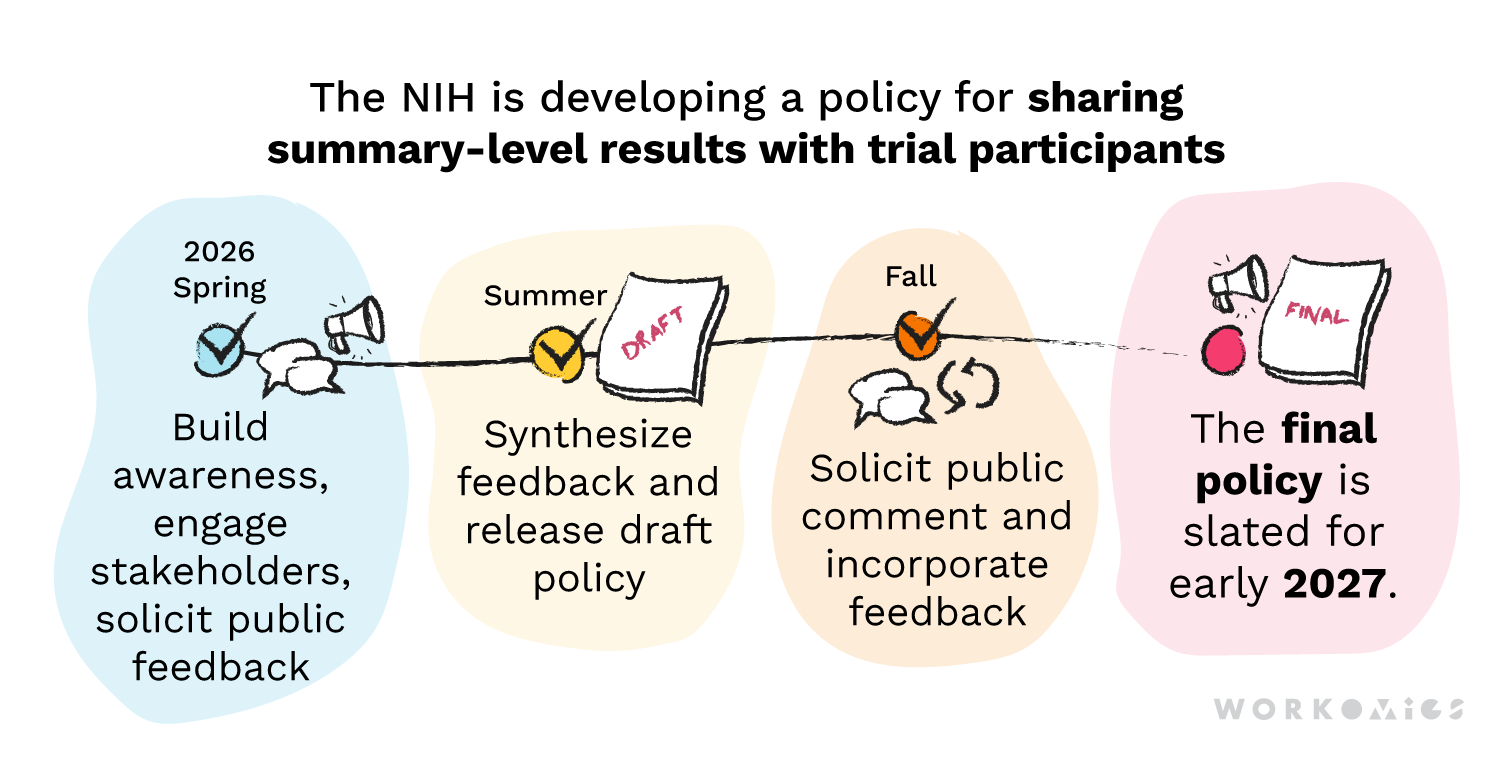
The number of countries with requirements for returning data to patients as Plain Language Summaries (PLS) is growing. The US NIH joining the list on August 27, 2026, when they released their draft policy for sharing summary-level research results.
The NIH draft policy would require all NIH-funded researchers and institutions to:
- share summary-level study findings with research participants in plain language
- offer participants the choice to receive summary-level results
- let participants know if summary results can’t be shared and why
- confirm with NIH if the trial results or a status update was shared with participants.
The requirement would apply not only to clinical trials, but to all clinical research funded by the NIH. It is worth noting that throughout the development process, the NIH has been engaging stakeholders for input, intending to implement the final policy in 2027.
What does “returning trial results” mean in practice?
Returning trial results to participants is a growing global trend, but it is not standard practice everywhere. While governments (e.g., in the EU, and now the US) establish policies with broad requirements, industry gets to define how these policies come to life within their organisations.
The minimal version of returning trial results to patients could be a single tactic at the end of a clinical trial (like a plain language summary). But returning trial results also represents an opportunity to be something much more ambitious: a way to galvanize an organization and transform how they engage patients in research.
The value of a co-creative approach to sharing trial results
Defining what returning trial results looks like and the processes associated with it leaves a lot of ambiguity for individual trial sponsors to resolve (i.e., reporting cadence, whether it is something that is folded into protocols and/or consent). A co-creative approach surfaces real patient and caregiver needs and wants, and marries them with the stakeholder expertise and capabilities.
- As end users, patients and caregivers hold the key to what makes an effective summary of trial results. Collaborating with them can help define critical parameters and preferences for a given patient population and their caregivers, including:
-
- Trial data: Identifying which outputs from a clinical trial are most important for patients and caregivers.
- Distribution: Identifying preferred channels for receiving trial summaries, such as websites, printed materials, or live sessions.
- Format: Prototyping layouts and styles to determine participant preferences regarding ideal summary length and visual presentation of data (e.g., tables vs. infographics).
- Personalization: Determining whether participants prefer high-level aggregated data or individualized summaries that show how their personal results fit into the broader study.
- Timing: Establishing the ideal update cadence, such as receiving a single final report at the study’s conclusion versus receiving progress updates throughout the trial.
- Engagement: Clarifying the flow of communication — whether information should move one-way from researchers to participants, or two-ways to allow for questions and ongoing feedback.
- Returning trial results can benefit a diverse set of stakeholders across an organization. Collaboration from the outset creates buy-in and alignment, a foundation for smoother execution.
-
- For public affairs teams, returning trial results is a way to demonstrate patient-centric commitment. They will potentially be interested in ways to communicate and disseminate the research outcomes across corporate channels, including corporate websites, congress booths, and social media.
- For advocacy teams, work-in-progress on clinical trials can be an important messaging pillar when they engage with relevant advocacy organizations. This can be unidirectional (sharing out results), but it can also be bidirectional, getting feedback on the elements of a trial that matter most to the patients and caregivers grappling with the disease.
- For clinical trial operations teams, return of results should be reflected in protocols and informed consent. If summary data is available while a trial is still recruiting, it might play a role in any trial recruitment material.
- Even for commercial teams, there can be important connection points. Return of results is not a promotional document, and it’s important not to use it as such. But summary results establish the foundational understanding that commercial teams will want to build on. To the extent that patients and caregivers have participated in the design of the return of data, the insights can also be a valuable starting point.
- Legal and regulatory teams are likewise a critical stakeholder across all of the above. It’s important that summary results are clear and easily understood by study participants, but it’s equally important that it doesn’t stray into pre-approval promotion. Working collaboratively to establish those guardrails while the summary data approach is defined creates the conditions for success.
Preparing for what’s to come
The trend to share trial results is no doubt rising. For industry, it should not be a question of when sharing trial results will become standard or required. Organizations should instead ask how they can use the return of trial results as a way to engage patients in clinical research.
Taking a co-creative approach allows organizations to triangulate across the many different facets of this challenge:
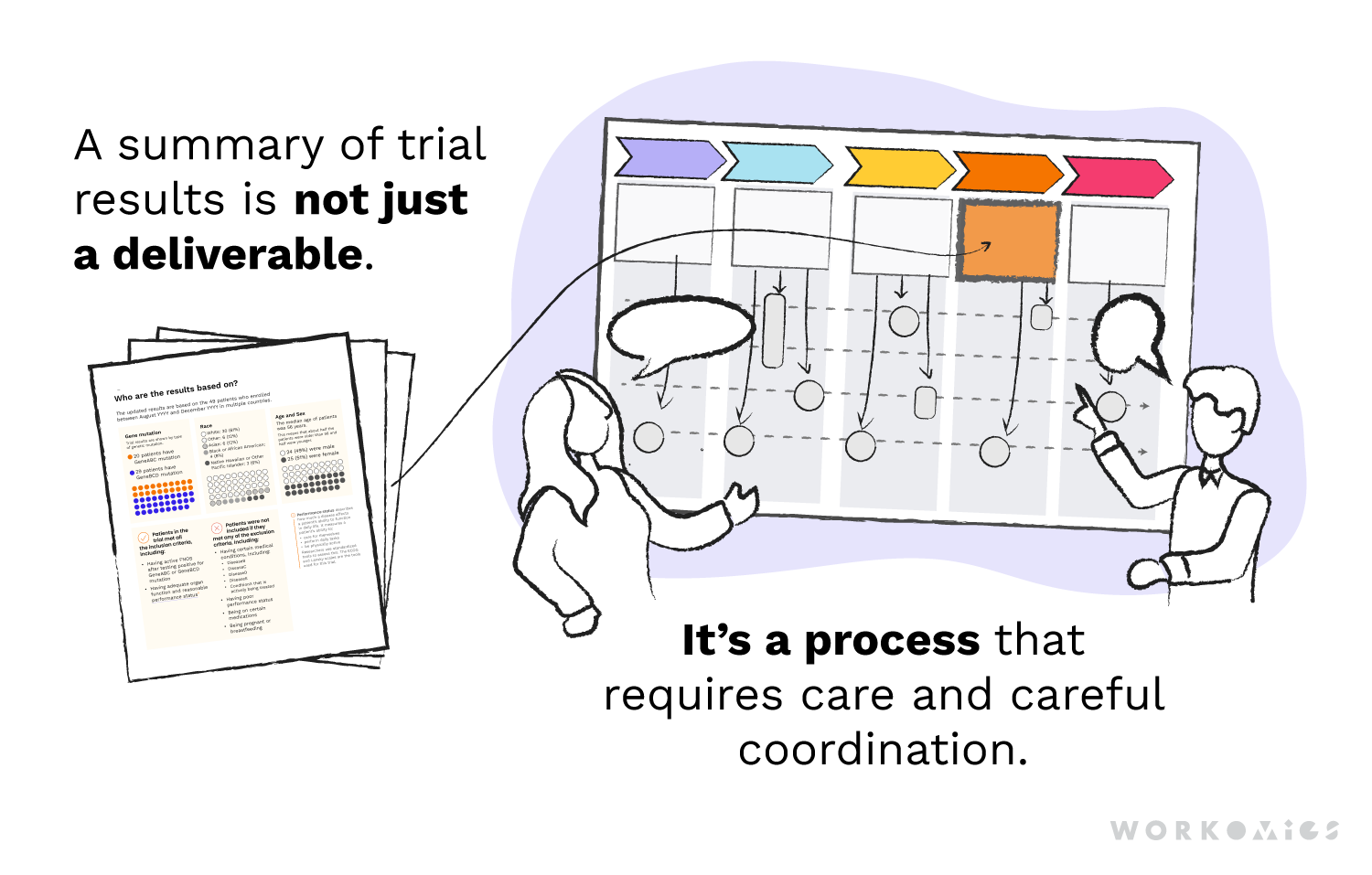
- A summary of trial results is not just a deliverable. It’s a process that requires care and careful coordination.
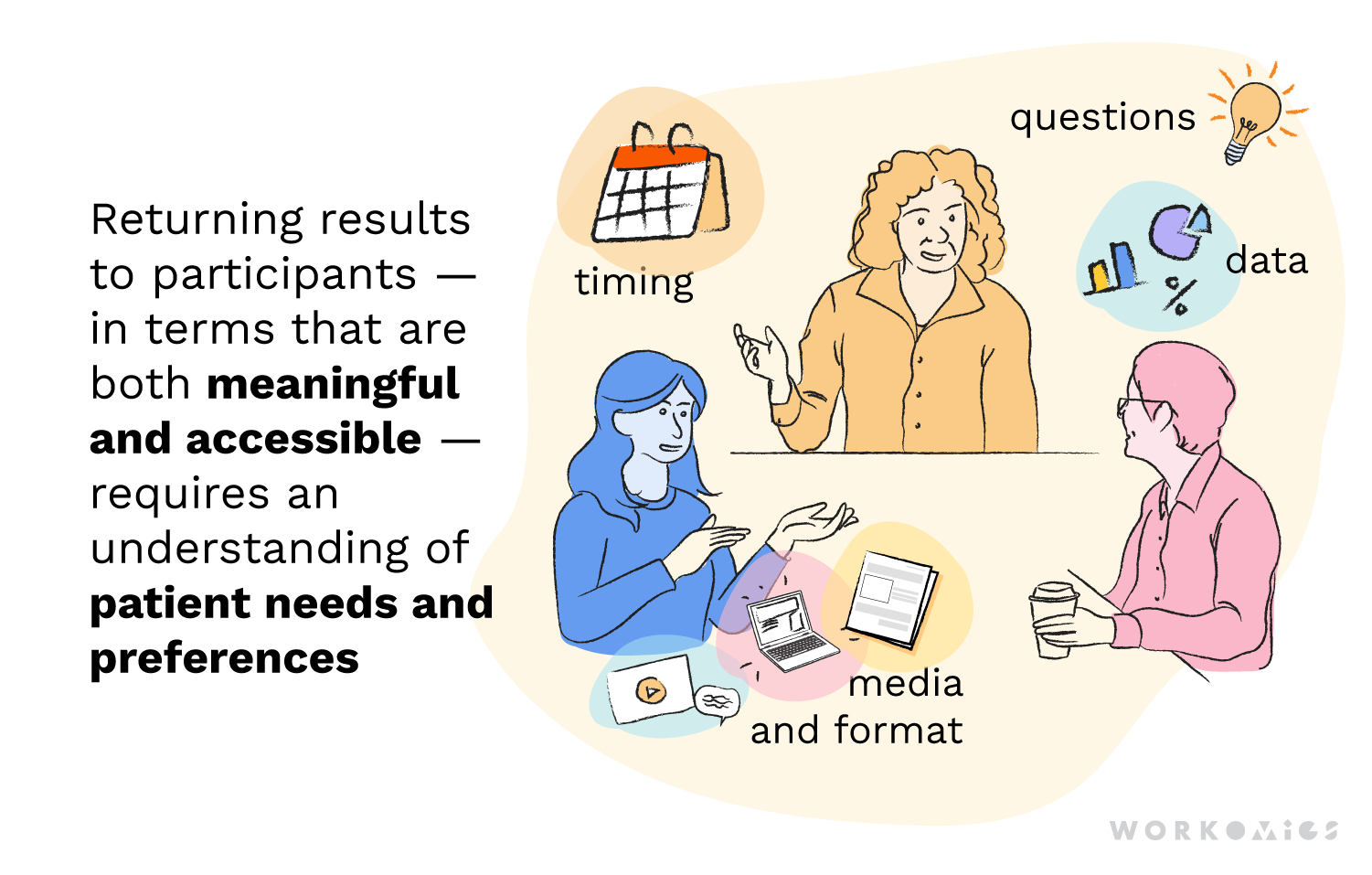
- Returning trial data to participants — in terms they will engage with and understand — requires understanding patient needs and preferences.
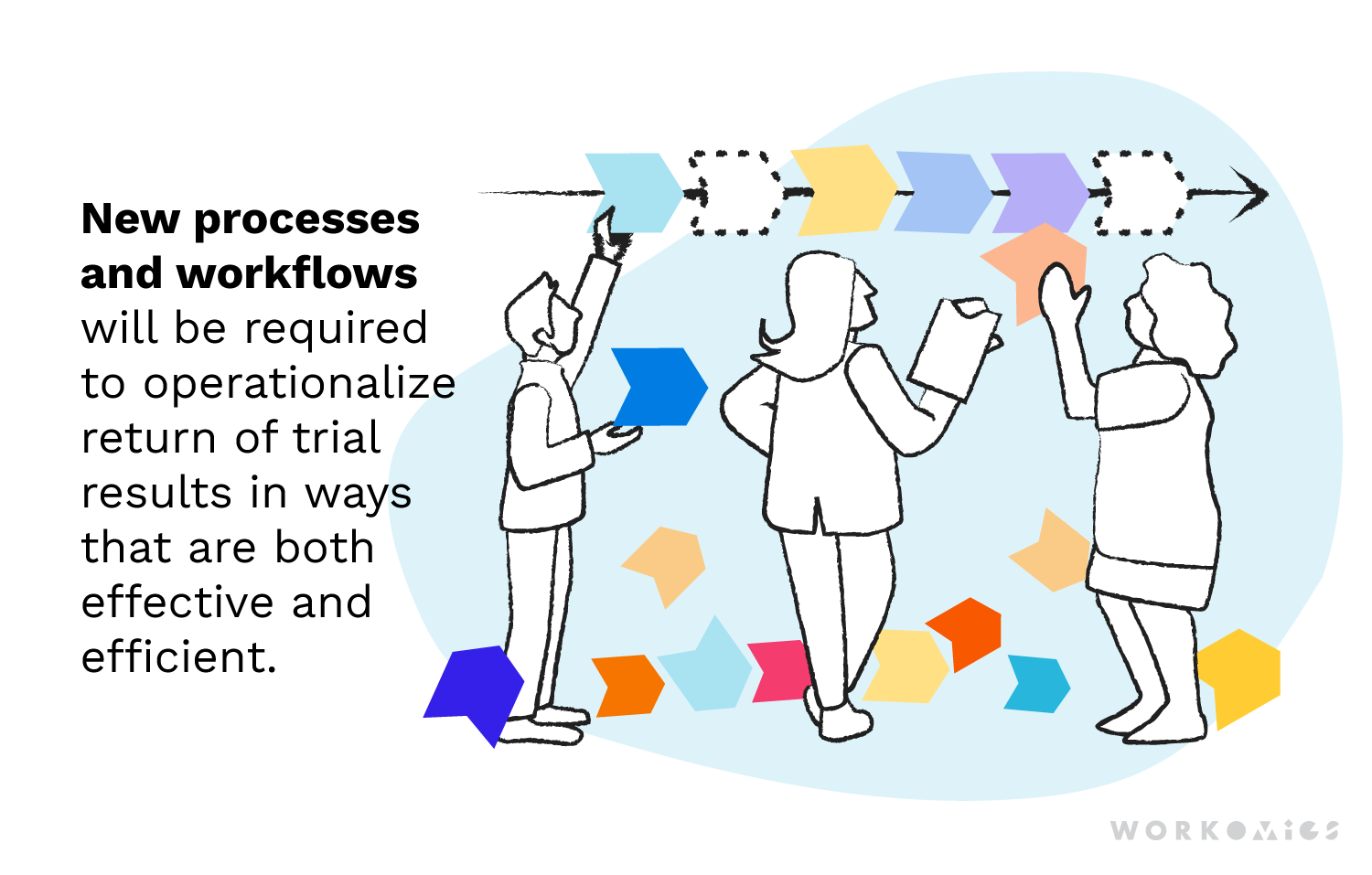
- New processes and workflows will be required to operationalize return of data in ways that are both effective and efficient.
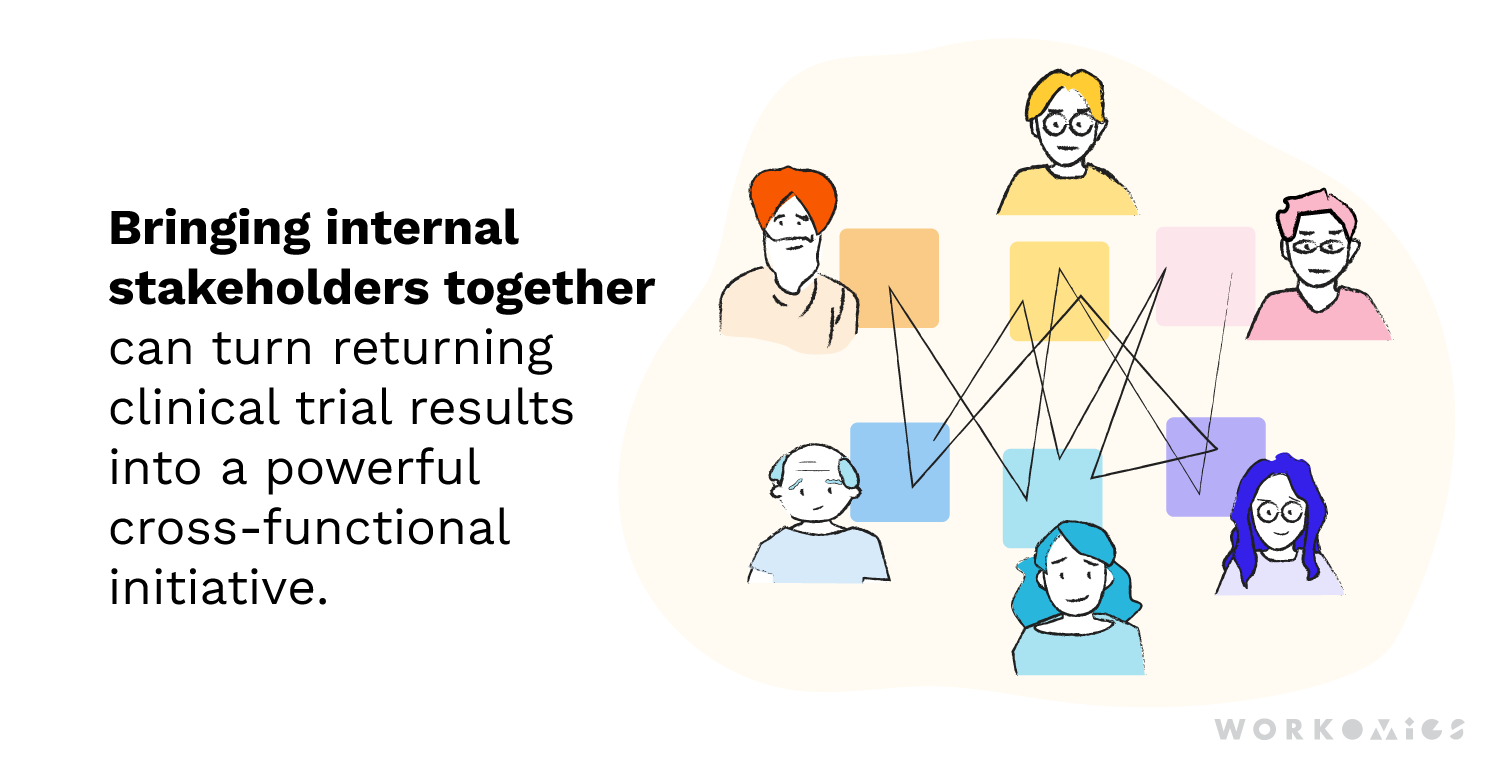
- Coalescing internal stakeholders can make returning clinical trial results into a powerful cross-functional initiative.
- A co-creative approach allows return of trial results that are patient-centric and compliant.
While it’s never too late to start this work, experience shows that waiting to react to requirements yields vastly different results than staying abreast of the conversation and adjusting ahead of time. Proactively building an enterprise approach allows for consistency in communication and streamlining of back-end implementation, but it is equally valid to start with something tangible (like a PLS for a single trial) and generalize the practice across the organization over time.
Further reading:
- Learn about the draft policy from the NIH
- Articles about the value of returning results to participants:
Our other ideas worth exploring

A new approach to clinical trials
A look a how Bayesian analytics could open the doors to cheaper and faster clinical trials

Why building awareness for rare disease clinical trials matters
A framework that can help us better measure patient experience, and allow organizations to continually learn, grow, and implement changes both small and large to improve patients’ experiences.

Improving patient experience: a multidimensional measurement framework
A framework that can help us better measure patient experience, and allow organizations to continually learn, grow, and implement changes both small and large to improve patients’ experiences.