
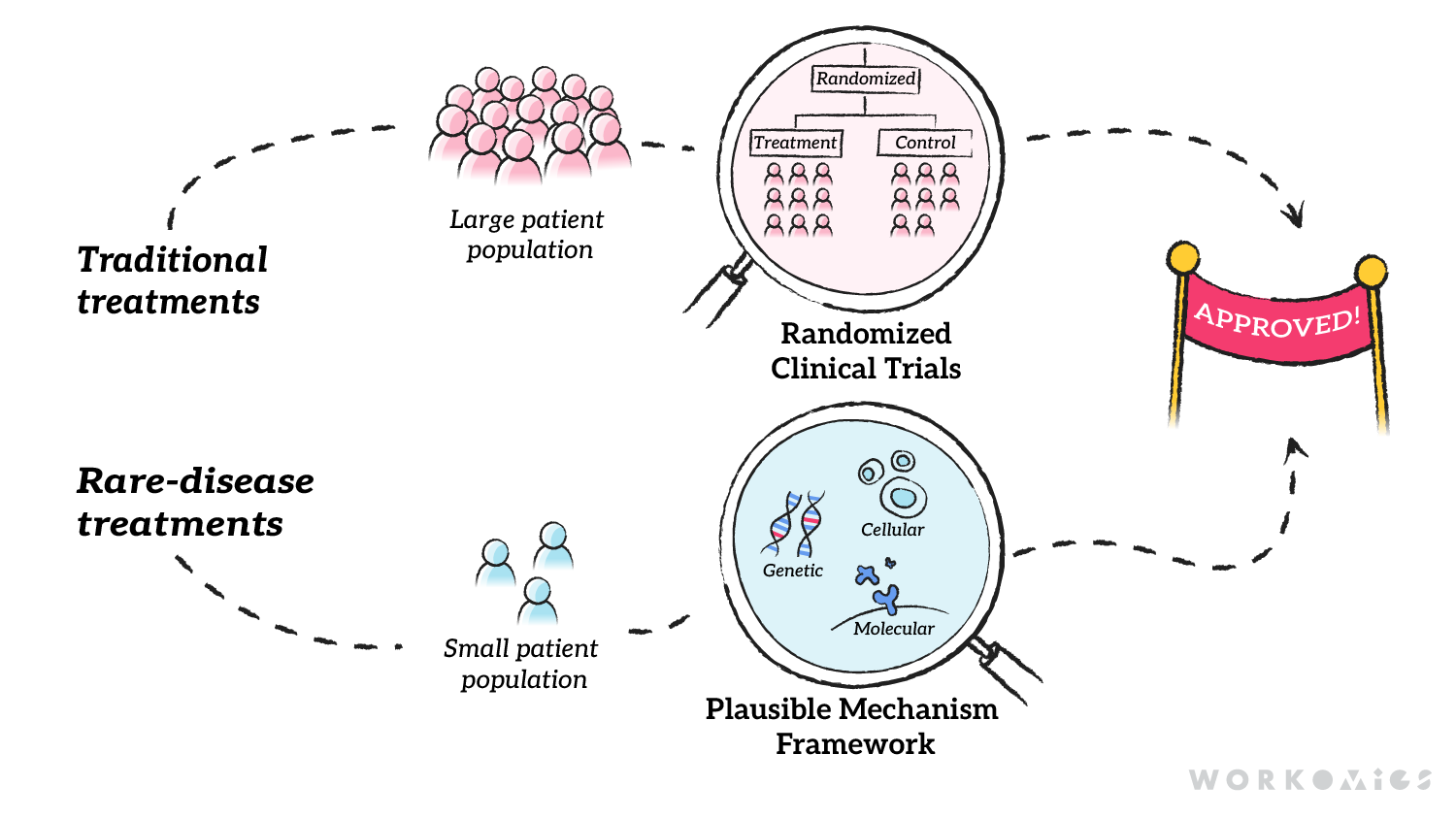
Under this new framework, regulators may be able to approve the treatment even when large patient populations don’t exist, if researchers can clearly show:
- How a disease works at the genetic, cellular, or molecular level;
- How a treatment addresses that mechanism, and
- Improvements that would not have been seen in patients without treatment.
This shift towards evaluating potential therapies based on how well they address specific mechanisms could speed up the development of rare disease treatments. It also means that it’s more important than ever to make sure patients and healthcare providers have a clear understanding of the science behind the disease and treatment so that they can make confident, informed decisions about their care.
Our other ideas worth exploring

Form design 101
A look at the experience of using and designing a form – an integral step to providing care that shapes the overall patient experience.

Hybrid co-creation in pharma and biotech
An examination of how bringing internal participants together for a hybrid co-creation creates shared intentions and speed to market.

Informed consent in healthcare: adding to FDA guidance
A look at best practices in patient communication that may help comply with FDA guidance on informed consent, as well as practical tips.