
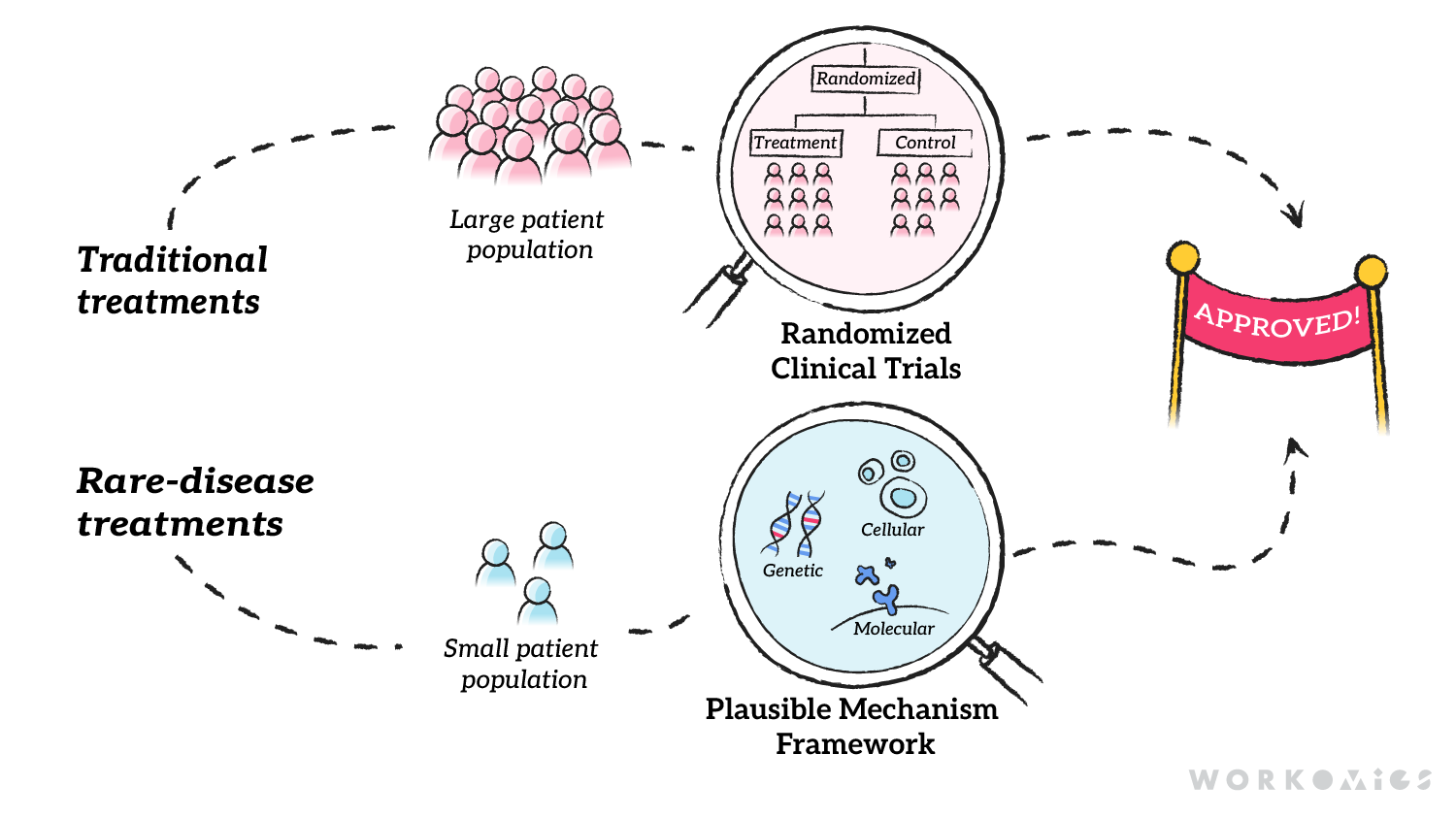
Under this new framework, regulators may be able to approve the treatment even when large patient populations don’t exist, if researchers can clearly show:
- How a disease works at the genetic, cellular, or molecular level;
- How a treatment addresses that mechanism, and
- Improvements that would not have been seen in patients without treatment.
This shift towards evaluating potential therapies based on how well they address specific mechanisms could speed up the development of rare disease treatments. It also means that it’s more important than ever to make sure patients and healthcare providers have a clear understanding of the science behind the disease and treatment so that they can make confident, informed decisions about their care.
Our other ideas worth exploring

Improving accessibility
An exploration of the four primary principles we follow for improving accessibility of patient resources.

The participation problem: addressing socioeconomic barriers in clinical trials
Examining the structural and economic barriers that impact patient participation in clinical trials, and our approach to the problem.

Women’s representation in clinical research
An examination of the gap in understanding women’s health by looking back at women’s representation in clinical research over time.