
This insightful article in the MIT Technology Review discusses the rollout of Sepsis Watch, a Duke Institute for Health Innovation deep-learning model designed to help emergency department (ED) doctors spot early signs of sepsis.
We thought it was a great case study highlighting just how important it is to consider our end users’ workflows, behaviours, and expectations when introducing new technologies. Since rollout, Sepsis Watch has dramatically reduced sepsis-induced patient deaths in the hospital. The algorithm is a clear technological victory. However, Sepsis Watch’s success is also attributable to the significant social labour that went into its rollout within Duke Health.
During the initial trials, Sepsis Watch identified high-risk patients with impressive accuracy. Nurses, responsible for hour-to-hour monitoring of patients, were quickly alerted when any of their chargers were at risk. Once flagged, the protocol then required nurses to call an attending ED physician directly, but this is where Sepsis Watch hit a roadblock. As one nurse recalled: “Are you kidding me? We are going to call emergency department attendings?”
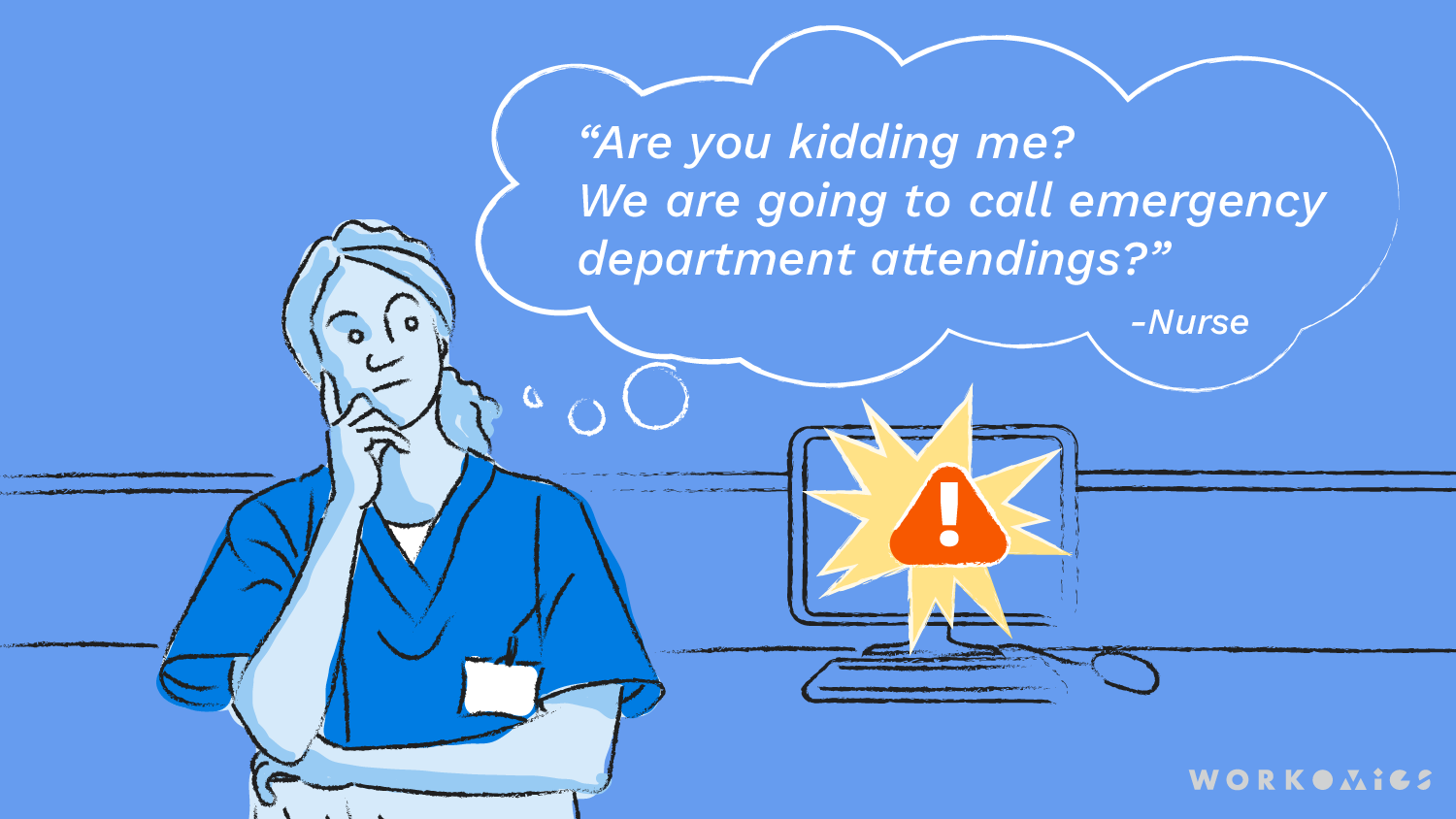
New, innovative technologies can be disruptive, sometimes requiring the humans who use them to adjust their established workflows, behaviours, and expectations. Sepsis Watch’s protocol required a significant departure from established norms and workflows in the hospital; nurses and attendings often had no prior relationship, and placing a call to an ED was disruptive, representing a complete reversal of the typical chain of command. Recognizing this as a barrier to a successful rollout, the design team set out to repair the “disruption” by hosting informal events with nurses to build excitement and trust around the rollout and refine communication approaches to better align with ED attendings’ needs. Additionally, regularly reporting Sepsis Watch’s wins back to clinical leadership helped to solidify support for the initiative.
We think this is a great case study for how to integrate new disruptive technology into the workplace, highlighting how early consideration for our stakeholders’ specific workflows, behaviours, and expectations can help us de-risk a rollout plan. Not only can a co-creative approach help us build better solutions for our stakeholders, but by actively engaging with them early on, we can better understand our users’ diverse perspectives and competing priorities, make key trade-offs, and anticipate what important details will drive success in the real world.
Our other ideas worth exploring
Prioritizing Patient Messaging: A framework centred in patient experience
We use a patient-centric framework to help prioritize the focus of patient messaging across three phases: activate, evaluate, and initiate.

AI search is transforming patient marketing
AI search is transforming digital patient marketing. We outline how biotech marketers can create content that is more likely to show up in AI overviews.

Bedside Manners: How an OBGYN approaches patient education
An interview with Dr. Hava Starkman, a clinical fellow in midlife women’s health, about how she approaches patient education.