
As part of our ongoing conversations with HCPs, we recently interviewed Dr. Hava Starkman, a clinical fellow in midlife women’s health at McMaster University and a certified OBGYN. In our conversation Dr. Starkman shared how she navigates ensuring patient understanding when explaining complex concepts.

WORKOMICS (WKO): Can you tell me what your day typically looks like? What kinds of interactions do you typically have with patients?
Dr. Hava Starkman: If I’m in the hospital, my day involves checking in on patients who are pre- or post-operative, sometimes operating. If I’m on a clinic day, I see patients in consultations. I am also involved in screening and HPV testing, which is new in Ontario and requires a lot of education around why we’re doing it.
WKO: How do you go about explaining complex information to your patients?
HS: I do a lot of post-operative counseling and management with patients, which includes discussing topics like pain management and medications. My experience with this comes from trial and error on what wording resonates best with patients. I’ve done training and received guidance as a resident, as well as learning from more experienced senior practitioners. When having these kinds of conversations, there’s the standard way of explaining things, but it’s important to meet patients where they’re at, which means adjusting my language or style of talking to make sure patients understand. This is especially important if it’s after surgery, when patients may have a harder time following the information.
WKO: How do you know if a patient has understood what you explained to them?
HS: I’ll ask simple questions to see if they understand, or will ask them to repeat it back to me.
WKO: Are there any interesting tools that you use to explain complex concepts to patients?
HS: I use a lot of diagrams, or I’ll draw, or will put it in writing. I’m prepared to do this with every patient I meet with. I’ll come in with a diagram of a uterus and will draw in the abnormality, or will send them to a website that is particularly good. In the past, I’ve had a translator come in with me if there’s a language barrier.
WKO: How do you counter misinformation without alienating a patient?
HS: I try not to dismiss a comment or say anything that outright counters what they say. Sometimes I will say things like, “That’s not what I’m familiar with, but based on what I’ve read and seen this is what I know.” At the end of the day it’s all about trying to provide people with as much safe and evidence-based information as I can, so that they can make decisions for themselves.
Our other ideas worth exploring

AI search is transforming patient marketing
AI search is transforming digital patient marketing. We outline how biotech marketers can create content that is more likely to show up in AI overviews.
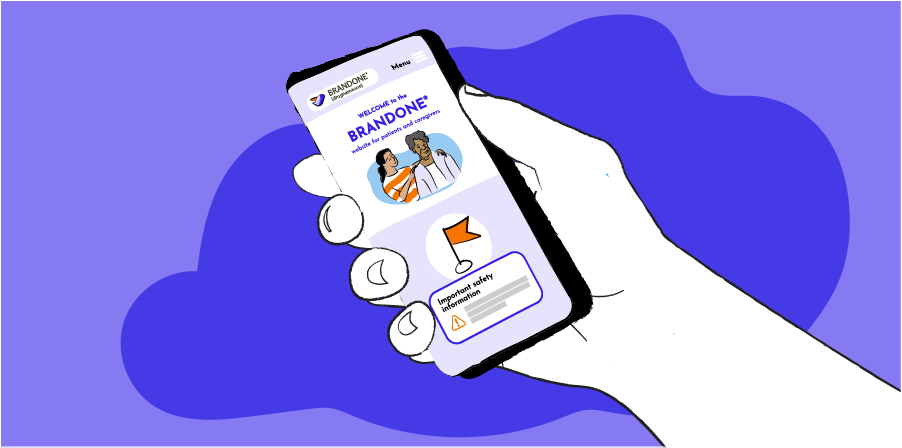
Redesigning Important Safety Information (ISI) for advanced therapies
Important Safety Information appears throughout branded patient marketing materials. We think differently about how we can communicate ISI to patients.
Knowing when to start, and stop
Ella Korets-Smith talks about starting two different biotechs, the experience of winding one of them down, and how she prioritizes relationship-building.