
Dr. Bianca Muylaert: I try to keep the communication as simple and clear as possible. I think that giving too much information at once can be very overwhelming and hard to retain. If the patient has a chronic condition that will require long-term medication, I use the first encounter to explain about the disease, and go over management options quickly.
I write down the name of their condition and provide handouts about the possible medications that can be used. That makes it easier to come up with a plan on follow-up — the patient has had time to read about their condition and the medications and come up with questions.
Some of the biggest challenges I face are misinformation from social media, distrust in the medical system from certain cultural groups and time constraints during visits. For example, I might be working with a parent of a kid who has severe atopic dermatitis, who comes in with a strong preconception that beef tallow is the best approach. It can be very difficult to convince a parent that using topical steroids or systemic medication is better and safer for the patient, especially when these complex conversations often need to happen within a 10- to15-minute visit.
WKO: Skin reactions are a common side effect of many cancer treatments. How is it different to discuss and treat skin conditions that are the result of another therapy? How do you approach it?
BM: Most patients who develop skin side effects from cancer treatments are aware that rashes are one of the most common side effects. I try to highlight something positive during what is often a very challenging time for patients. For example, with immunotherapies, I always point out that cutaneous side effects can be associated with a good response to cancer treatment.
Depending on the skin reaction, treating oncology patients can be more challenging because many immunosuppressive medications cannot be used. Luckily, now there are excellent targeted therapies that can be safely used in combination with cancer treatments. In these cases, I try to follow patients closely. The goal is to avoid discontinuation of their cancer treatment due to medication side effects, so I want to help them as quickly and effectively as possible.
WKO: Some skin conditions are rare or ultra-rare. How do you grapple with rare conditions as a physician? How does it change your approach to patient communication compared to more common diagnoses?
BM: These conditions can often be more challenging to treat just because fewer patients have been studied and there may be less evidence to guide our decisions. When I speak to patients, I am transparent about what we do and do not know, and I try to provide them with as much reliable information as possible, including trusted websites, patient resources and support groups. With these patients I usually emphasize the importance of reliable support groups so that they can hear from trusted sources and share about their condition. We are very lucky to be living in a time where information is so readily available for everyone. I try to make sure that they feel supported and informed, and I explain that we need to work together to find the best treatment approach for their rare condition.
WKO: How does ChatGPT or other AIs show up in your interactions with patients? Do you find patients turn to them often? Does it help or hinder the clinical interaction?
BM: Most of the time I find it helpful when patients use AI. Whenever I see a patient, I like to briefly name all the treatment options available, and which one would be the most beneficial in their case. Now, so many patients have already done some research about their treatment options and already have some understanding about the medications. AI makes our interaction more effective because they already have a knowledge base. Ultimately the patients are more likely to use the prescribed medication because it ends up being a shared decision.
Recently I had a patient with a chronic condition for which there is a new medication available. The moment I mentioned the new treatment option, her face lit up. She was very happy that I recommended it for her, because she had already done some research and knew that this was the best option in her case. I find ChatGPT more helpful than social media. Misinformation from social media can be difficult to address and may even promote harmful practices such as avoiding sunscreen or “tanmaxxing”.
Our other ideas worth exploring
Bedside Manners: How an OBGYN approaches patient education
An interview with Dr. Hava Starkman, a clinical fellow in midlife women’s health, about how she approaches patient education.
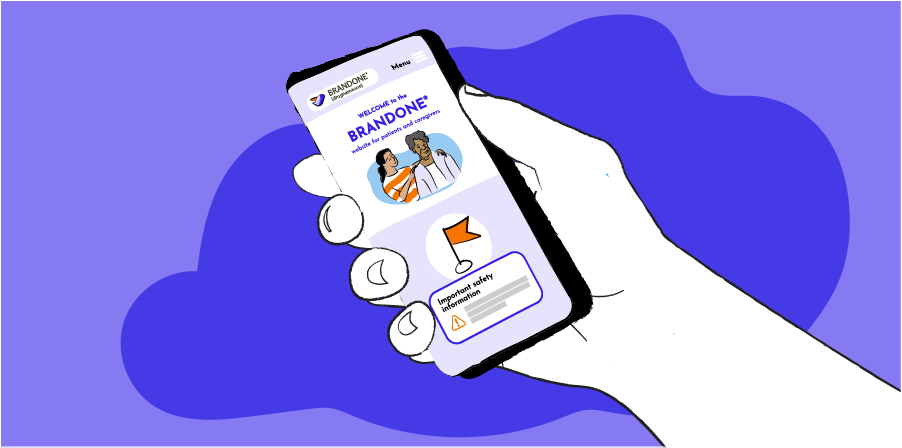
Redesigning Important Safety Information (ISI) for advanced therapies
Important Safety Information appears throughout branded patient marketing materials. We think differently about how we can communicate ISI to patients.

A closer look at the investigational drug daraxonrasib
The RAS protein has historically made pancreatic cancer hard to treat. Darasonrasib takes a different approach.