
Developing marketing materials for patients living with complex and rare diseases requires an approach that is distinct from treating patients like consumers. Forced to navigate a fragmented and overwhelming healthcare system, this patient population needs brand marketing materials that offer concrete support instead of depicting vague promises of hope. That’s why our approach to brand marketing is built on clear and effective communication ranging from UX, visuals, clinical trial data, and important safety information.
Portraying authentic experiences
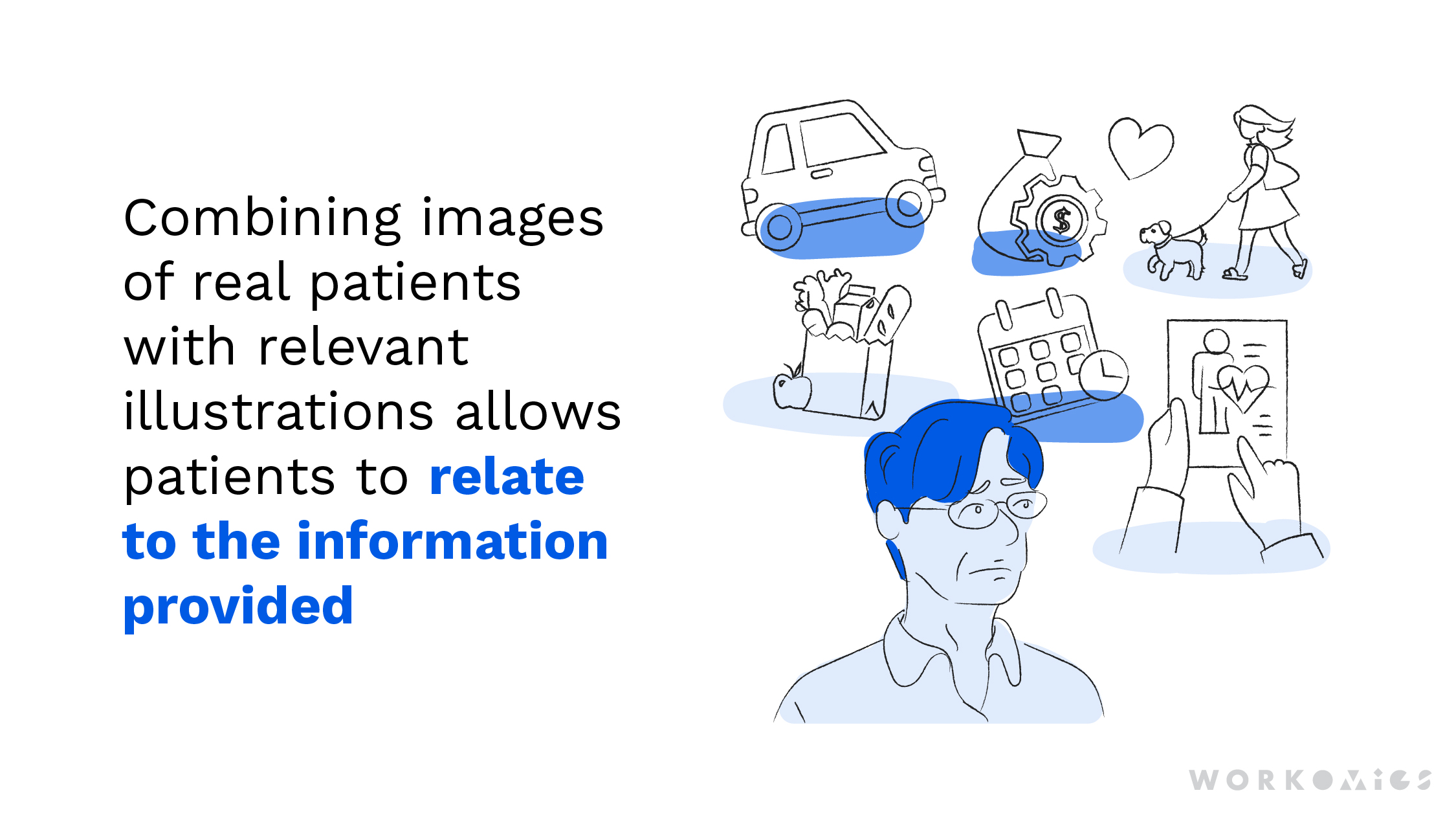
Patients living with rare diseases often spend years researching their symptoms and condition, and are exposed to many brand marketing campaigns. They know when something feels dishonest or skewed, or is overpromising potential outcomes. When developing a visual brand, our biomedical communicators demystify complex medical topics by effectively using visuals to convey important ideas with simplicity and accuracy. Illustrations allow us to emphasize the most important aspects of a brand’s messaging, while real patient imagery (where possible) builds rapport.
In complex oncology or rare disease campaigns, showing real people managing their treatment or living in remission is much more meaningful than yoga-on-the-beach clichés. We hear time and time again in co-creation workshops and interviews that hearing and seeing someone who has gone through a similar experience helps patients trust the information provided.
When contextualizing moments of the patient experience, we rely on illustrations to provide diversity and representation. This is particularly important when depicting rare and complex diseases, so that patients who rarely meet someone with a similar experience can still feel seen.
Designing with complexity in mind
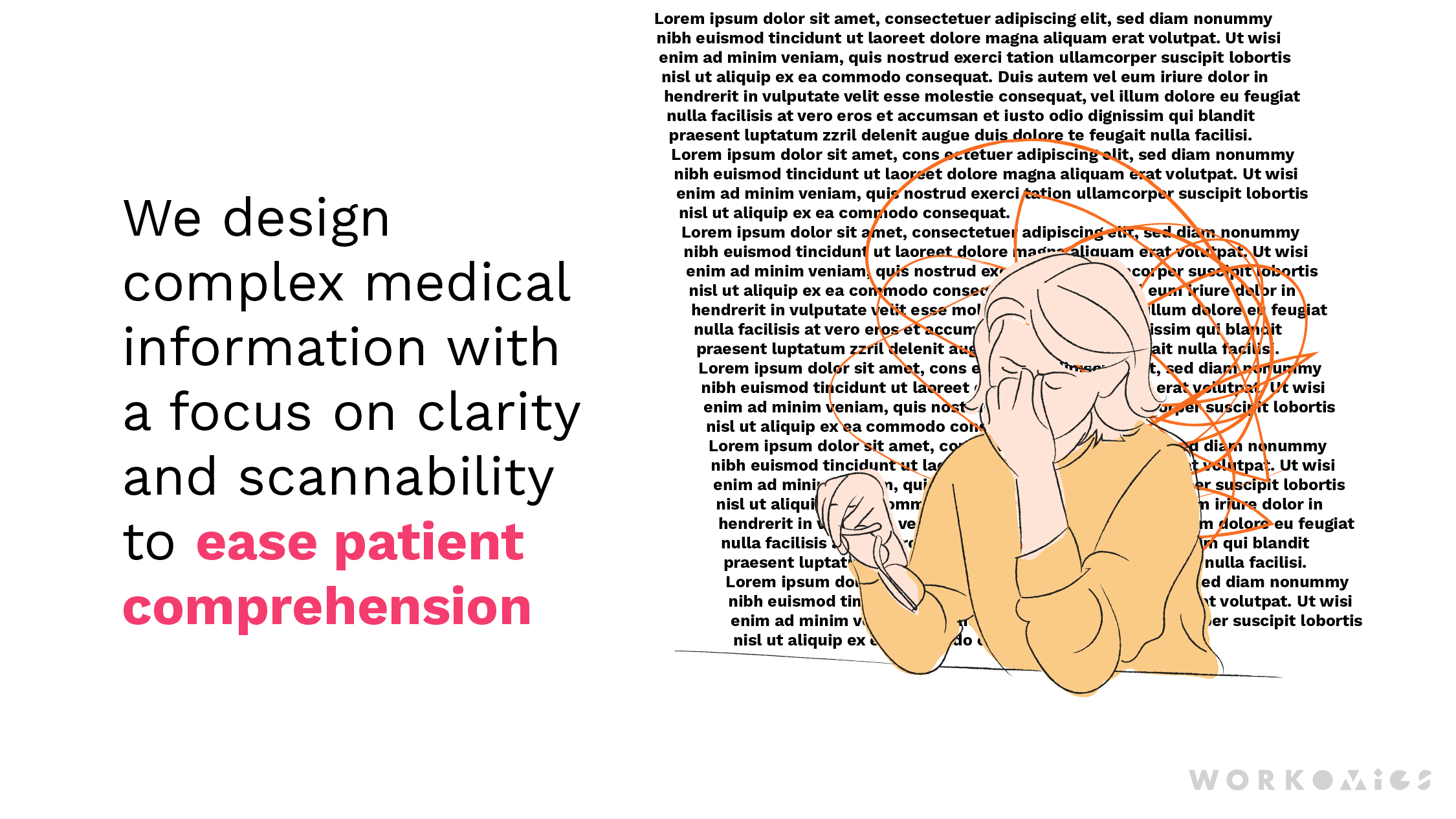
Clinical trial reports and treatments’ important safety information documents often contain dense medical details that can feel overwhelming and scary to patients. By reducing the cognitive load of understanding complex medical information, patients feel confident and empowered to make treatment decisions and have productive conversations with their HCPs.
When designing complex data we focus on scannability and clarity to ensure that text hierarchy, iconography, and adherence to accessibility standards allow for patients to dive into the data based on their own informational needs and interests.
In order to depict scientific concepts such as treatment mechanisms of action, we use clear 2D animation styles to support understanding amongst patients and caregivers, in contrast to more complex and realistic 3D styles of animation typical in HCP communication.
Looking at the patient journey as a whole
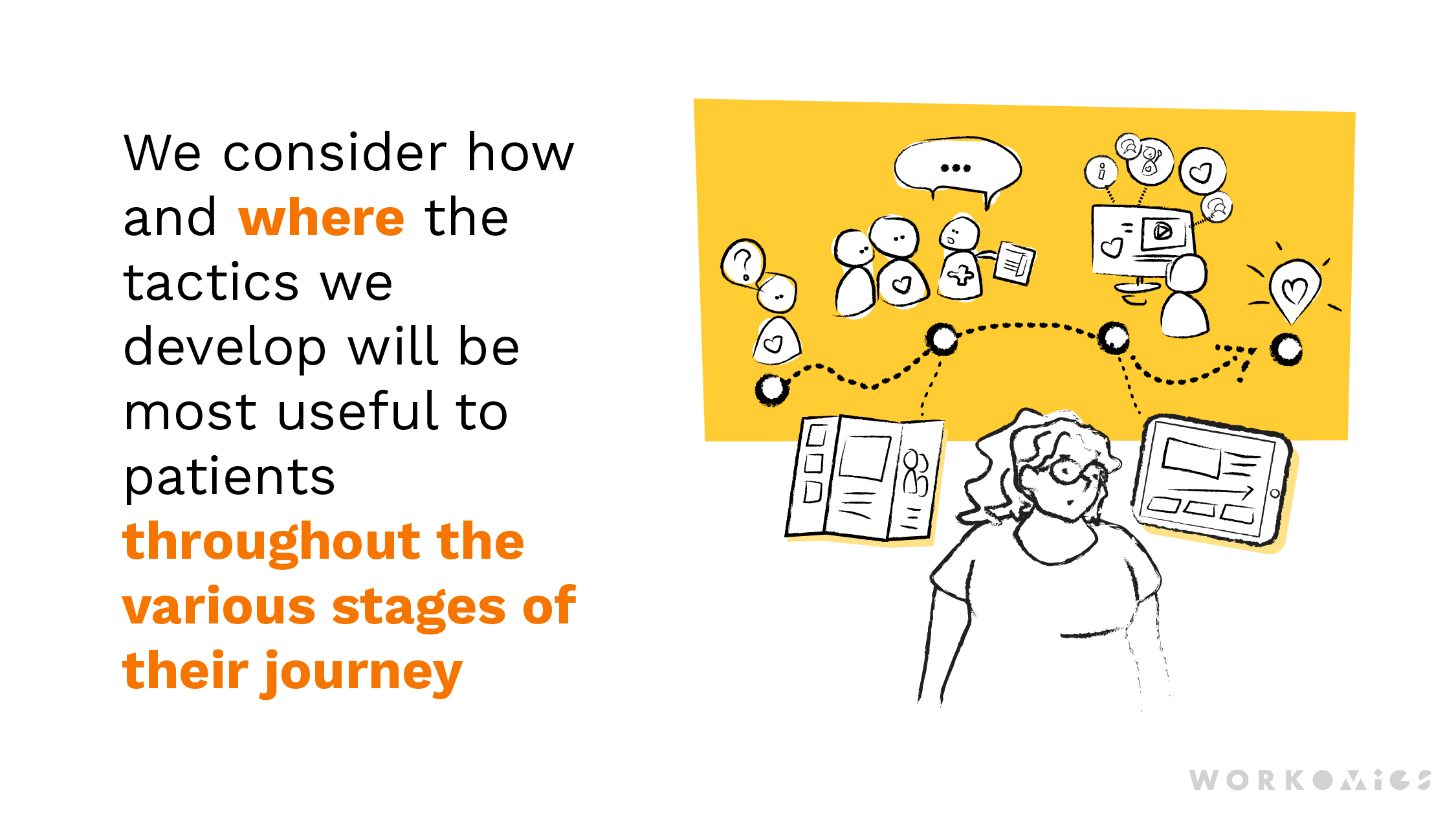
Building a strategy for patient brand marketing means we consider how and where brand messaging becomes tactics that are most useful to patients. If something is aligned to brand objectives but not rooted in patient need, uptake will be low, reducing potential business impact. In our co-creation workshops we often anchor materials to the journey and spend time with participants talking about their needs at each stage of their journey to ensure that current and future tactics are rooted in the patient experience as a whole.
We often look at unmet needs of patients in order to factor in non-medical resources such as peer-to-peer connections, links to advocacy groups, access support, and other resources. Widening that aperture from “receiving treatment” to “navigating care as a whole” can help brands find moments where they play a critical role in patients’ treatment trajectories.
Providing patients with clear, holistic information about treatment across brand marketing assets enables patients to have concrete and effective conversations with their care providers, which can feel particularly daunting for patients of rare and complex diseases where information is sparse. This includes providing FAQs at different stages of the journey, encouraging patients to prepare questions for HCPs in advance, providing definitions and sound clips, and other means of helping patients be active participants in their own care.
When developing patient marketing materials we take a patient-centric approach by co-creating materials with patients, caregivers, and HCPs, and focusing on the information most crucial to patients throughout their journeys. We prioritize clear, functional design that helps brands move towards being a trusted partner in a patient’s journey.
Building evergreen materials
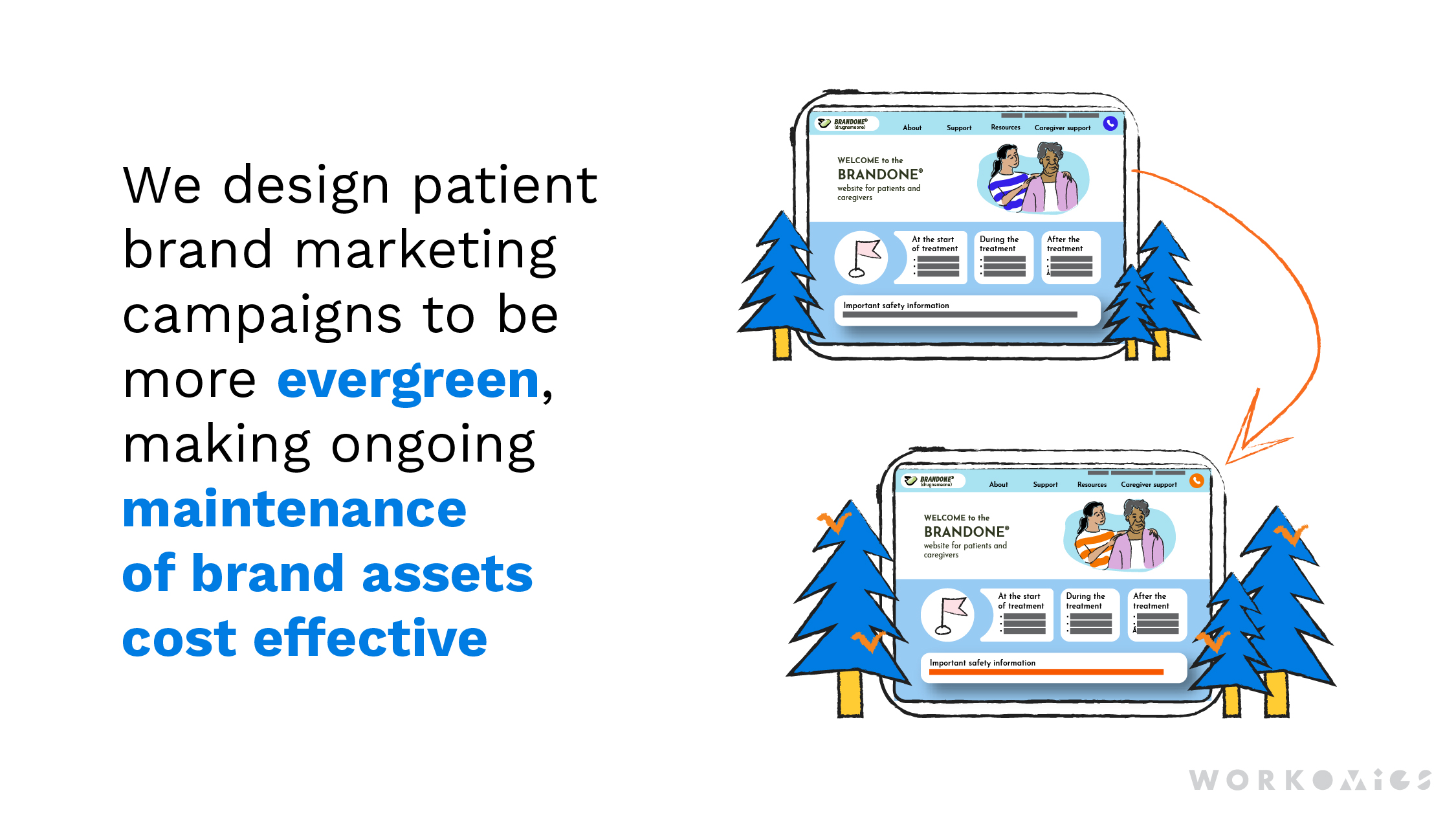
In HCP campaigns, it’s important to stay fresh and communicate continuously about a treatment. For patients there’s a different calculus: each patient comes to your product and your messaging for a limited time, as they navigate their disease and treatment. For instance, when a product receives significant label changes, patients typically don’t want or need any messaging about the change itself — all they need is to be provided with accurate information at the time they are doing their research.
This means you can structure patient brand marketing campaigns to be more evergreen from the start. Invest in a thoughtful, patient-centric campaign at the outset, and it won’t need to be renewed every year, lowering the long-term cost of patient marketing. There are brand campaign elements we co-created over ten years ago that are still in-market because of their lasting relevance. That is the power of building it right the first time.
Our other ideas worth exploring
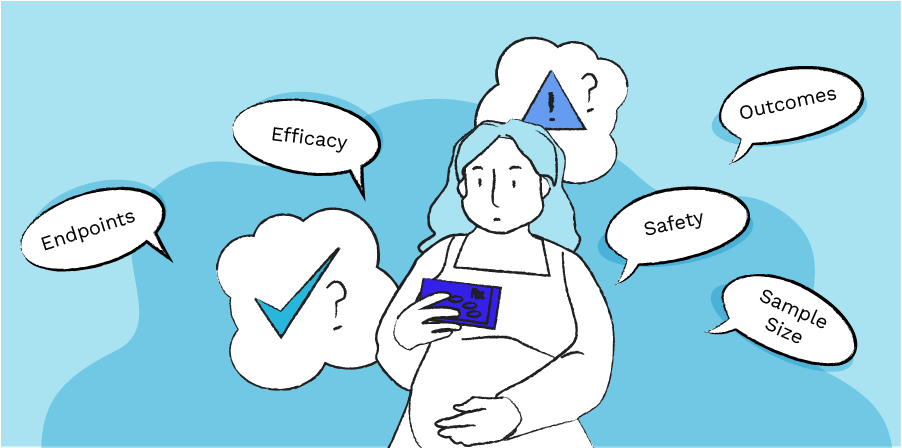
Clarifying clinical trial results
For brands, communicating clinical trial results is usually paramount—the clinical efficacy data, balanced by the side effects observed, is the foundation of the product’s value proposition for patients. But clinical trial data is typically complex, and can be difficult for patients to understand.
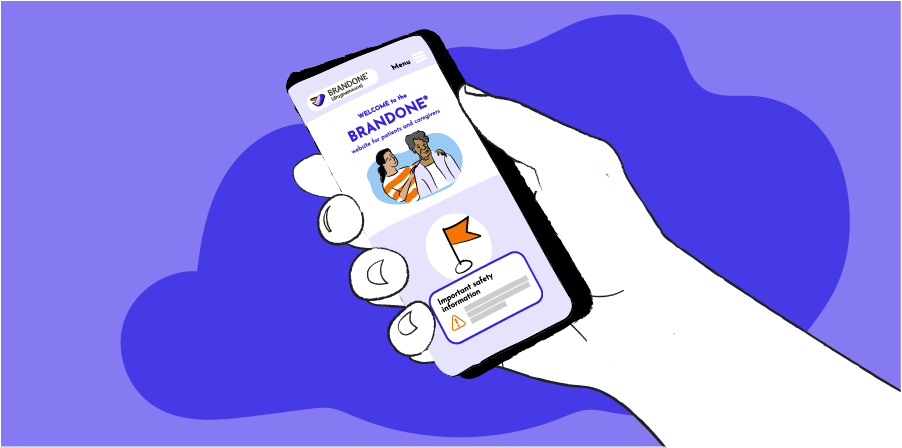
Redesigning Important Safety Information (ISI) for advanced therapies
Important Safety Information appears throughout branded patient marketing materials. It captures key information that patients with advanced and complex diseases want to know, and supports informed consent for important treatment decisions. Countless hours of co-creation time with patients, caregivers, HCPs, and subject matter experts has helped us think differently about how we can communicate ISI to patients.

Human-centered systems thinking: lessons from the Sepsis Watch rollout
Back to Ideas Some time ago, we came across an insightful article in the MIT Technology Review discussing the rollout of Sepsis Watch, a...