
It is, shall we say, unorthodox to incorporate a new business and then for the founder to set off on an eight-month sabbatical a year and a half later. In a traditional organizational structure with a single leader at the top, it might not even be possible; certainly it would be massively disruptive.
Susan, one of the co-founders at Workomics did indeed have plans to go on such a sabbatical. Fortunately for her and for the company, Workomics is not organized on traditional lines. At Workomics, we have very deliberately set about establishing a shared leadership model, where ultimate decision-making authority rests not with one person, but with several.
Co-leadership is sort of all the rage in the not-for-profit sector right now. In large part, this is in response to high levels of burn-out in the sector, and the belief that with shared leadership models “the stress and responsibility previously placed on one individual is now distributed across a few.1” Leaders who are working in a co-leadership model talk about so many benefits:
- Sustainability in terms of the impact of the work and the well-being of the people doing the work
- Having someone to catch the ball if you miss it
- Being able to lead more often from a place of strength
- A feeling of community and expansiveness
Those were all things we wanted with Workomics — to have co-conspirators, and share in building something that would be better than what any of us could build alone. You know, and also to have people who could run the place while one of the founders went gallivanting in Europe.

Co-leaders at Workomics
And so, a few months back, we signed the paperwork to make Workomics a joint venture between three colleagues. The three of us, Michelle McCune, Terri Block, and Susan Bartlett, have worked together for years. Professionally, we’ve shared great wins and a few crushing blows. We complement each others’ skills and share the same values. And it’s just a delight to come into work every day and get to spend time together.

Of course, co-leadership is not a free lunch. In a webinar we watched on the topic, they talked about vulnerable communication being so important. It’s a tricky one, because it’s not a muscle we exercise often. As a trio, we are pretty good at some aspects of that — taking accountability, admitting uncertainty, circling back if we think we said or did the wrong thing. We are not always so good at asking for help. We tend to keep more on our individual plates than we should, or to push through sickness rather than handing off work to focus on rest and recovery. But truthfully, communication is hard no matter what, so it’s also an advantage that co-leadership provides so many opportunities to build those muscles.
More importantly, there is a wonderful alchemy when we get into a room together. The work itself is better for having three perspectives, and the experience of work is improved because we enjoy each others’ company so much. Few things in this world bring us as much joy as three hours in a room together with a whiteboard, some markers, and a problem to solve. We feel so fortunate and grateful to share in the leadership of Workomics.
Our other ideas worth exploring
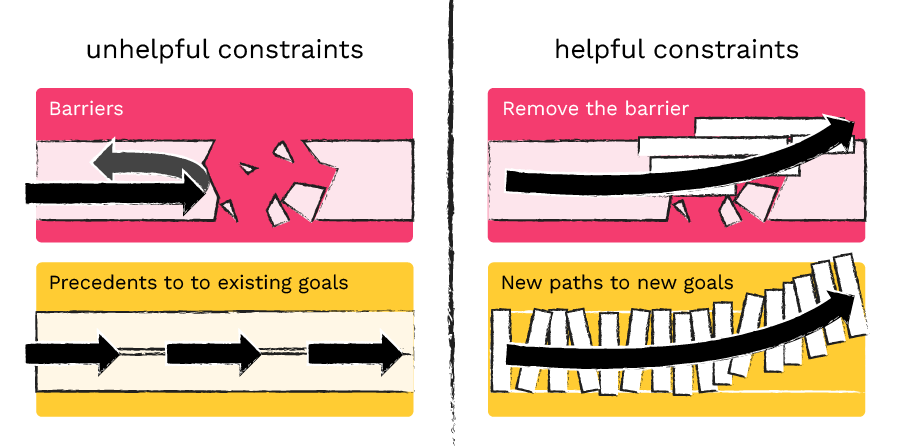
Calibrating constraints
A discussion about the nature of constraints at work, focusing on their benefits and drawbacks, and tips for working within their bounds.
Co-creation and the ownership effect
An examination of the challenges of balancing paid work with caregiving responsibilities, with suggestions for how to create a caregiver-friendly workplace.
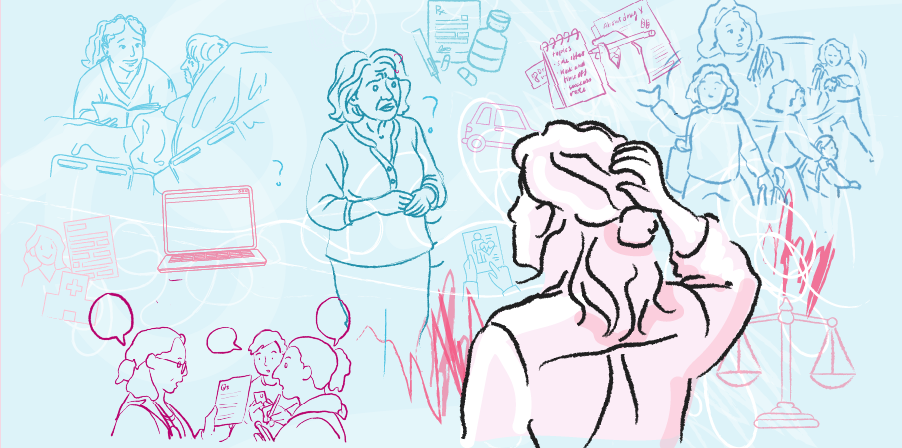
Caregiver-friendly workplaces
An examination of the challenges of balancing paid work with caregiving responsibilities, with suggestions for how to create a caregiver-friendly workplace.