
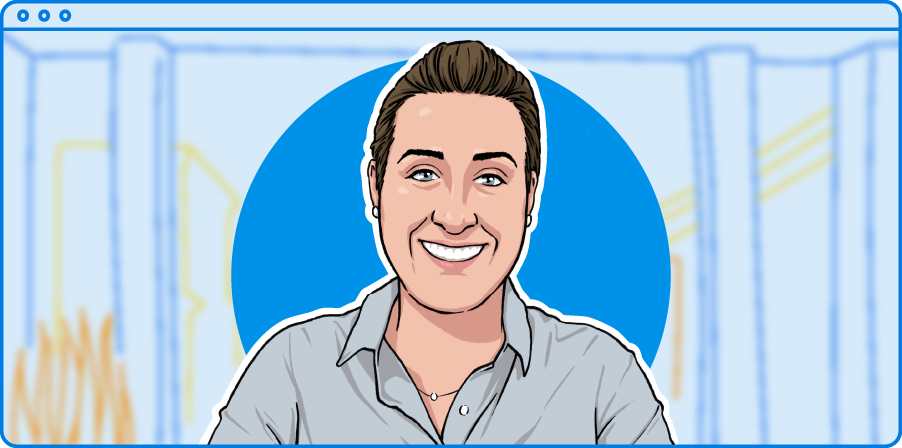
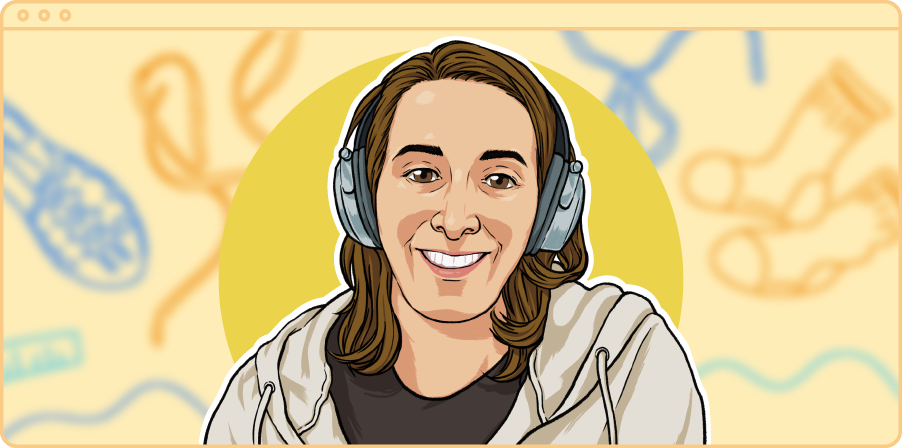
This instalment in our Women’s Entrepreneur Series is an interview with Katie Klumper, the CEO and founder of Black Glass. Black Glass was launched in 2020 under the IPG umbrella, as a consultancy specifically for Chief Marketing Officers (CMOs). Black Glass supports on the enterprise side, delivering results within their marketing teams and broader organization; and on the personal side, increasing their individual impact as professionals.
In her conversation with Workomics, Katie talks about the unexpected upside of launching a business in a pandemic, the importance of teams who get the complexity of executing strategy, and why it’s so important to constantly iterate your team’s operating model.
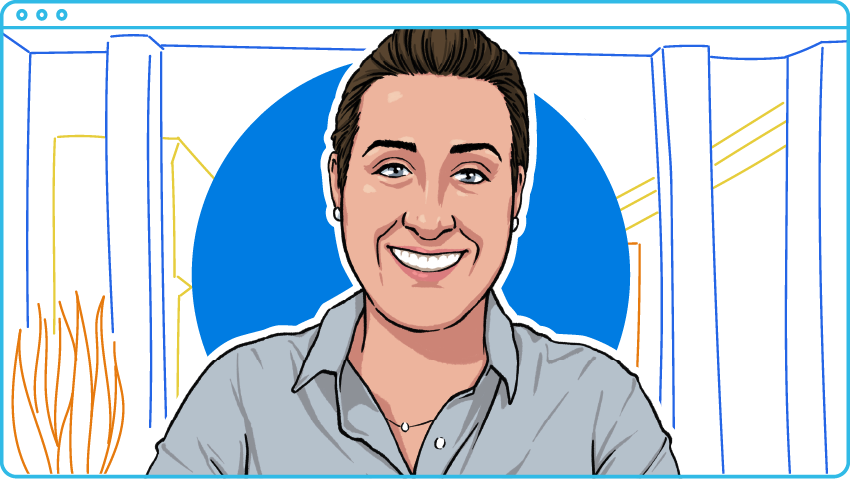
WORKOMICS: Supporting CMOs with their personal impact is a unique aspect of your business. What got you excited and motivated to make that an offering?
Katie Klumper: At Deloitte, I helped run the marketing strategy and creative practice. A lot of clients were asking things that were on the fringes of the work. “I’m walking into a board meeting, can you help me prep?” or, “I am looking to increase my executive presence, who should I talk to?” These needs came up again and again, which got me thinking. To be effective as a leader, you need to be supported as a person. Research proves that if you support the individual then the company will thrive as well. That’s where we thought the duality of supporting clients as a leader, in society and culture and in the company would be differentiated in the market.
I think about the pressure CMOs are up against. They’ve just gone through a lot of business brand consumer evolutions, they’re tackling issues related to broader societal issues like Roe v. Wade, Black Lives Matter, the pandemic. How do we give context, data, and advice that allows them to execute through those kinds of challenges?
WKO: It’s a partnership — really helping them think through the hard stuff. OK, so let’s wind back the clock to before you started the business. What made you turn your thoughts towards this path?
KK: I am an entrepreneur at heart. I always knew I wanted to start a business of some sort. But I also have two young kids. I wanted to get away from the constant travel that is traditionally part of the consulting world. I love the work, I love the clients, I love the people that I work with. How do I do that in a format that’s sustainable for my family, my husband, my personal mental health? That’s what really motivated me to not only create a business that really supported our clients differently, but also a business that supported me and my team —and mothers— differently as well.
There’s a lot of things that we do as a company that’s a little bit different from the consulting road-warrior mindset.
WKO: Online, you’ve highlighted all kinds of things that would make traditional consulting people recoil: actively encouraging side hustles, four-day work weeks, offsites with no PowerPoint.
KK: PowerPoints are built for three-to-five year plans — for executives who are not executing. We’re really focused on creating a talent base that’s able to advise on some of the topics that arise in an 18- to 24-month timeframe. Having a side hustle is incredible because our team members are actually in Shopify and understand what it looks like to drive customer demand and build a direct consumer business. Having the duality of those skill sets helps us have a competitive advantage compared to other consultants who traditionally are very well-pedigreed with MBAs but haven’t necessarily had the exposure to the real-world building, and understanding the complexity of executing some of those strategies.
WKO: We know you set it up under the IPG umbrella. Were you actively out there looking for a holding company or PE firm that would be interested in partnering?
KK: I would like to say it’s that deliberate, but it was kind of more happenstance. My original concept was to re-imagine country clubs. For me, country clubs really catered to a very white, affluent, older demographic and I thought there was a business opportunity to develop something family-friendly, approachable, and modernized. I created a business called “The Fam,” I had space. I chased that for a while and met a lot of different PE firms and investment firms.
I was told very clearly that while it was an interesting idea, they would not fund a business because I did not have hospitality experience and I hadn’t started my own company. That’s when I said, “I’ve taken 20 meetings. I clearly need to pivot.” I ended up creating a social club and consultancy as it relates to CMOs. It just so happened that IPG was looking for the same thing at that time. I bumped into them, and it ended up being a really good fit on both sides.
WKO: We note timing-wise that Black Glass launched right in March 2020, right in the teeth of the pandemic. Tell us how that that felt.
KK: It was ten days before lockdown that we launched the company. Looking back, I don’t know that I’d want to do it again like that. It’s scary and you’re wondering, “How do I support my family and build a company?” and we’re doing it from the isolation of our own homes. But actually, it was the best time to launch because a lot of the market for traditional consulting had seized up. All the dollars are moving around, so you get a chance to take market share because existing vendors are getting cut or clients are looking for new solutions that can help them do things in a more agile fashion.
We went to market in a way that was very fit for that moment in time. It was scary, but also a huge opportunity. Anyone who ever thinks about starting their own company should look at moments like that, not as a reason to wait, but as an opportunity to bring the market what it needs at that moment.
WKO: How big was the organization in those early weeks? Did you have a small team to start up with?
KK: The original plan was to hire the core leadership team from day one. Ten days in, that did not seem like the right plan anymore. We shifted and started with just me, delivering deals through an independent consulting network. As we built up steam midway through the year, we were able to bring on the leadership team.
WKO: How do you think that shift affected the trajectory in good, bad or neutral ways?
KK: I think it forced me to get really clear on what we are delivering. What does work look like when we’re not delivering PowerPoint slides? There wasn’t a team, so I had to get crystal clear on the value proposition and the systems needed to execute it. Now when individuals come in, we can train on the systems and enable them to deliver in what is a very different model.
WKO: Outside the delivery model we’re curious about the cultural pieces like four-day workweeks and office closures. How did that get baked in?
KK: We knew we wanted to create a different culture. We wanted to rethink consulting because the model both for talent and clients wasn’t working. I saw a Harvard Business Review article that said consulting hasn’t been reimagined in over 100 years. We knew that to create a sustainable business we had to do it differently. How that manifested took time to figure out: what was right for our teams and right for the moment.
We tried the four-day work week for three months in the summer. To be honest, people didn’t really like it. It created an intense workload in four days given our virtual, asynchronous environment. With only four days, everyone was sitting at their computers for a longer period of time each day, which wasn’t the intention. Things like mental health, burnout, and Zoom fatigue got worse, because you weren’t able to do the asynchronous work with a lot of meetings in just four days.
We did the test, which is great. We learned a lot. At the end of it we decided it may not be the best for a virtual environment, because it increased the amount of fatigue on the team, and there are other opportunities to rethink the talent model.

WKO: What other kinds of things have you tried?
KK: We’re always testing new things. At one point we decided not to do a daily stand-up, because we want people to have flexibility. It didn’t work. People want community and connective tissue. You need to be in front of each other every day to check in, learn from each other, understand the business. We’re always tinkering until we get the right cadence. My advice to anyone is to keep playing with your operating model. People think it’s a stagnant thing. OK, the executive team meets on Mondays and the rest of the team meets on Wednesdays and then we’re going to do an offsite.
But what if you tried that and then decided we need to meet more often? Continuing to tinker with the system is really critical. Brands tinker with their advertising and media system every single week. Numbers are up or down, so we change the headline, move something around. How do we have that same amount of focus and emphasis on the operating system for the team?
WKO: Do people find that unsettling? We’re thinking back to past experience where some people experience the lack of routine as a source of anxiety, and other people are rolling with all your punches.
KK: The reality is change is happening whether we drive it or not. It comes down to how you manage the change and creating a change cadence. Instead of being haphazard, be deliberate. “OK, every month, every quarter, whatever the timeframe is, we’re going to look at it and roll out optimizations.”
It’s figuring out how you communicate, and creating structure and stability around that, so people know when to expect it. What are the things that we are tinkering with? What are we not? What are the things we’ve made calls on? It really helps create a change mindset within the organization, which is needed. The world is moving fast. Companies that are not able to operate that way will not be here in the next 10 years.
WKO: We notice when we’re talking about the employee experience, for you it seems like it’s been baked into your customer offering. We’re curious how you marry that employee experience team operating model with the more classic marketing pieces.
KK: There’s two things. One, it goes back to our consultants being trained on actionable strategies and actually being able to speak to it. If we’re going to comment on an operating model, we’d better be trying it out ourselves and making sure we understand the complexities.
The second piece is looking at how we help clients focus on employees and customers as one unit. One of the CMOs we just spoke to has HR reporting into them, because employee brand and customer brand are becoming so close. Layoffs are employee branding communications, which have become consumer communications very, very quickly. If they are one and the same, we need to be able to figure out how they work in concert, and how we help support CMOs in being able to drive some of those conversations.
WKO: So true. We’d love to hear a bit more about the intersection of motherhood and starting this business. You said it was one of the motivations for starting it.
KK: This was pre-pandemic, before everyone could work at home with their family. Travel was a necessary evil in consulting, but it just wasn’t working for me and my family. I have two young kids who were 5 and 6 at the time. They needed me there and I wanted to be there. I needed to find an environment where I could do the work I love and be able to prioritize them without having to compromise either side. I will not say I figured it out, but I have a much more fluid lifestyle where I can maneuver the two more in concert versus it always having to be a juxtaposition of choosing one over the other. That’s been really nice, especially being able to pass that along to the other females within my organization.
It is still messy. It is still difficult. It is still exhausting. Your kids will always want more time with you, but at least I know that I’m doing everything I can to both support my business and my family in a way that they both get the best out of me.
Our other ideas worth exploring
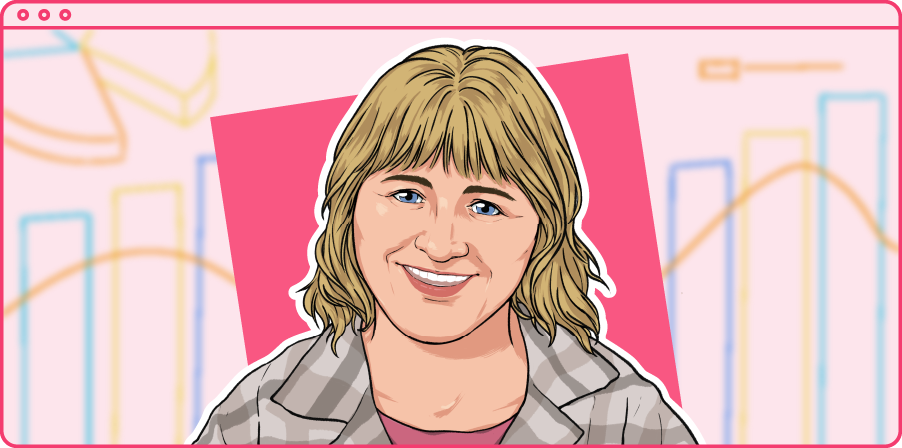
“I want to hang my hat on me”
Krista Lee Hynes, co-founder and managing partner at Ignite Financial, talks about her journey from theatre to financial planning, and why she has always bet on herself.
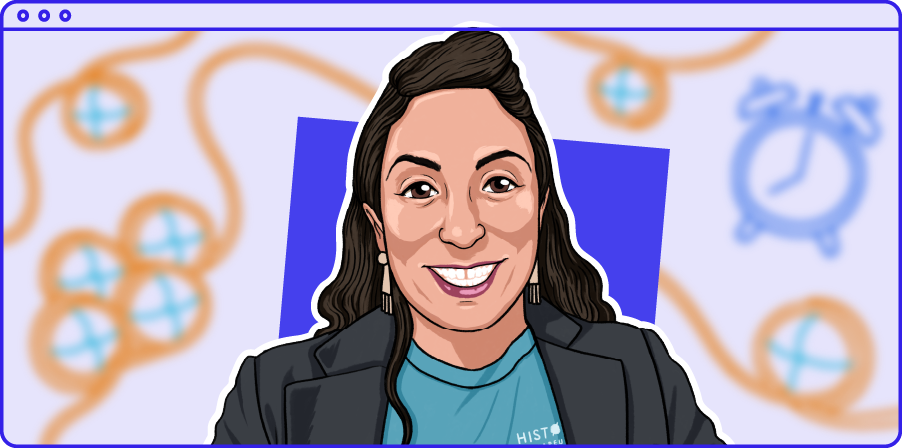
A new comfort zone
Shiri Levy, co-founder and Chief Scientific Officer at Histone Therapeutics, talks about building a biotech to bring a genetic medicine to market.
Running shoes designed for women
Lindsay Housman, CEO of Hettas, talks about researching and designing a running shoe specifically for women, along with her philosophy on flexible work, and the challenges of fundraising as a female founder.