
In this interview, Ella talks about starting two different biotechs based on the same technology, and the experience of winding one of them down. She also talks about her newest entrepreneurial ventures, and how she prioritizes relationship-building over the long-term.
Ella Korets-Smith: I’m a scientist by training. I did a masters in medical genetics and then decided I didn’t want to do a PhD, even though that was the assumed track. I wanted to see what else was out there and took a course in entrepreneurship. It was an a-ha moment: “This is how the world works!” I had spent so many years studying the minute details of specific proteins and what they do in the body. It’s very cool, and I really loved it. But all of a sudden, I was learning about how the world functions. It opened my eyes.
At the same time, I was working as a scientist at a biotech in Halifax under a new CEO. He basically said to me, “You understand the science and you can talk to people. You should be in business development.”
My first reaction was, “What’s business development?”
That CEO became my mentor, helping me transition from a bench scientist to director of business development for an early-stage cancer vaccine company. That became the basis for how I spent the next twenty years of my career: business development, strategy, and commercialization for biotech.
Now fast forward to working 10 years on the business side of biotech, and I was wondering what I should do next in my career. The answer from many people I asked was to move to the US and get a job with pharma or a big biotech, because that’s where all the business development opportunities were. I had two young kids, and that was not going to work for me. Instead, I hung up a shingle for what would become EKS Ventures. The idea was to try to build a career in business development in Canada. I would become part of companies on a fractional basis and do that strategic business development and commercialization work, sometimes having an executive role in that company, but not being a full time employee.
Through that model, I worked with a number of companies doing deals and co-founded a couple of companies with other partners, building them from scratch. I’m continuing to do that. But for me, it’s always about being deeply involved — investing my time and operating the companies, as opposed to being a consultant.
WKO: Having had that fractional leadership experience across a number of different ventures, what would you say you have learned about starting a company generally and starting a biotech specifically?
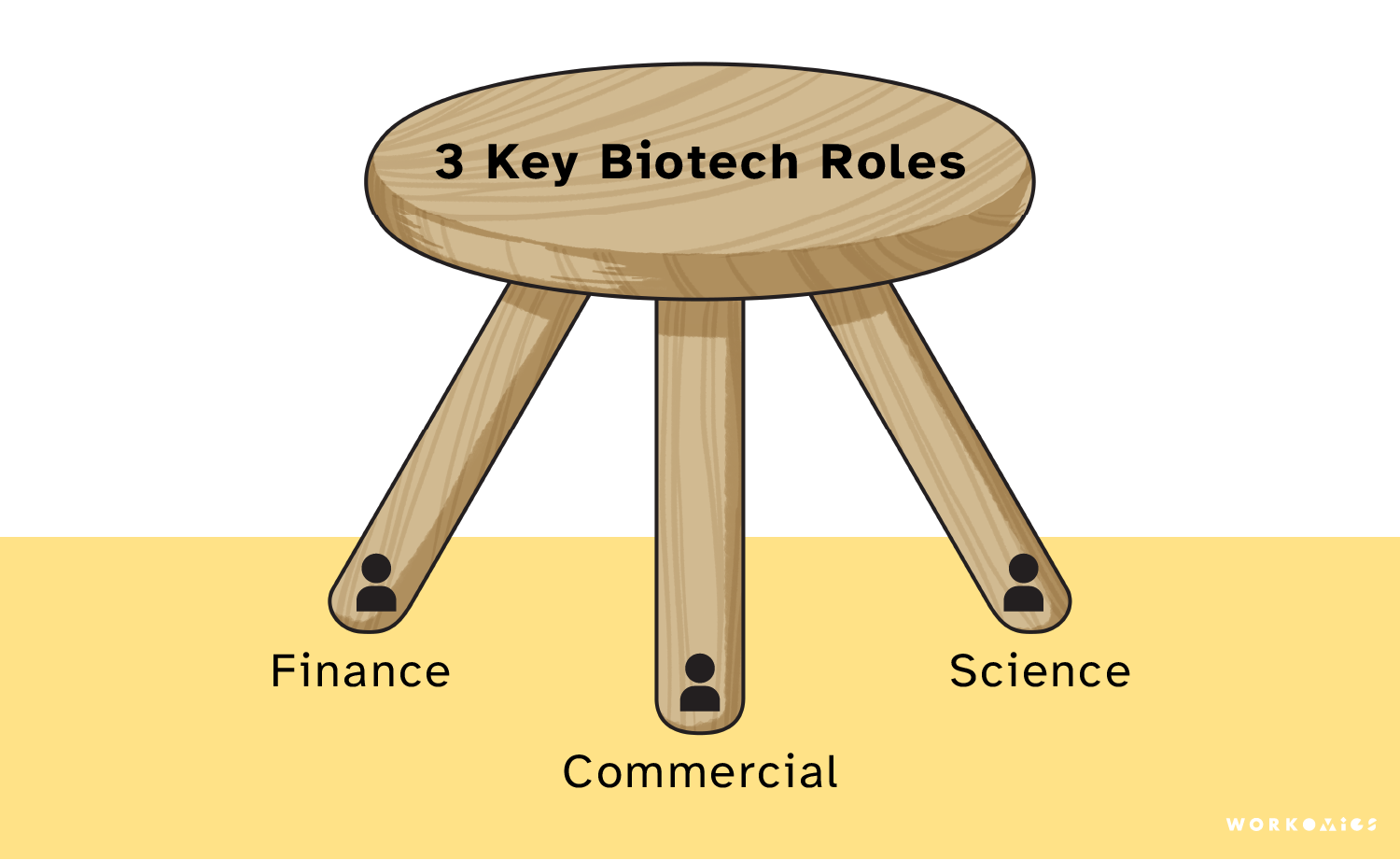
EKS: The very first thing is you need the right people around you. Yes, you need a technology that you believe in, but the team you are building is the number one most important thing. I think that’s true for any company, but for biotech specifically, the team has to be a three-legged stool:
- the science person, who “owns” the science and can stand by it
- the commercial person, who can translate the science and figure out how to make money from it
- the finance person, who either has money or can get money, so that you can actually implement the science.
Those three things, you must have. If you’re missing any one of those three pieces, it makes things much harder — or even impossible — to get off the ground.
EKS: I think of it as two distinct stages of a company: building mode vs. operating mode. For me, I love the first part, where you’re trying to create something, putting together the team and the structure. It’s more natural for me to imagine what needs to be done, to be consultative, to throw ideas around and then just do it. You can do that in the early building phase. Later, when you are operating and growing, you need more structure around decisions and communications. Especially if you are hiring people who are used to larger organizations, your internal decision processes and communications require so much more thought and planning. Until I realized that, there were instances of miscommunication in a growing organization that I didn’t even realize were happening. It was a huge learning for me.
WKO: We can see how that happens. In large pharma, so much time and energy goes into every decision and communication, because building and maintaining alignment in large organizations is so hard. Whereas the start-up ethos is more throwing spaghetti at walls to see what sticks, and people who join small start-ups in the earliest days are usually more comfortable with freestyling.
EKS: That was my realization. In an early-stage biotech, you are putting your neck out for something all the time. You are completely exposed, because every step is yours to take; you’re always personally making decisions, promoting something you think is right or killing something you think is wrong. It’s a constant state of baseline vulnerability.
For me, being open and vulnerable in that kind of way matches my personality. I like to communicate my position openly, hear from others, get their input, and then make decisions quickly. At times, I’m not sure whether this open style of communication is most likely to lead to success. I sometimes wonder if it would be easier if I was better at keeping things to myself, instead of my natural tendency towards open communication.
WKO: Does that open communication style ultimately create more fulfillment from your work?
EKS: I hope so, and I do think about it in those terms. What ends up happening for me most often is I lean toward getting involved in projects because I see someone struggle and think I can help with that. If it’s within the realm where I can support, I want to help the entrepreneur, I want to help the scientist, even if the project won’t necessarily fit the standard definition of commercial success.
WKO: Can we talk a little bit about Virica Biotech and Virano Therapeutics, the two biotechs you co-founded?
EKS: We created Virica Biotech in 2018, licensing a set of technologies from the Ottawa Hospital Research Institute (OHRI). It was a set of patents with two different applications: one for manufacturing, and one for therapeutics. We had the three legs of the stool: Jean-Simon Diallo is the scientist, Ken Newport is the finance guy, and I was the commercial person. We started with an early fundraising round that was friends and family plus Canadian angel investors.
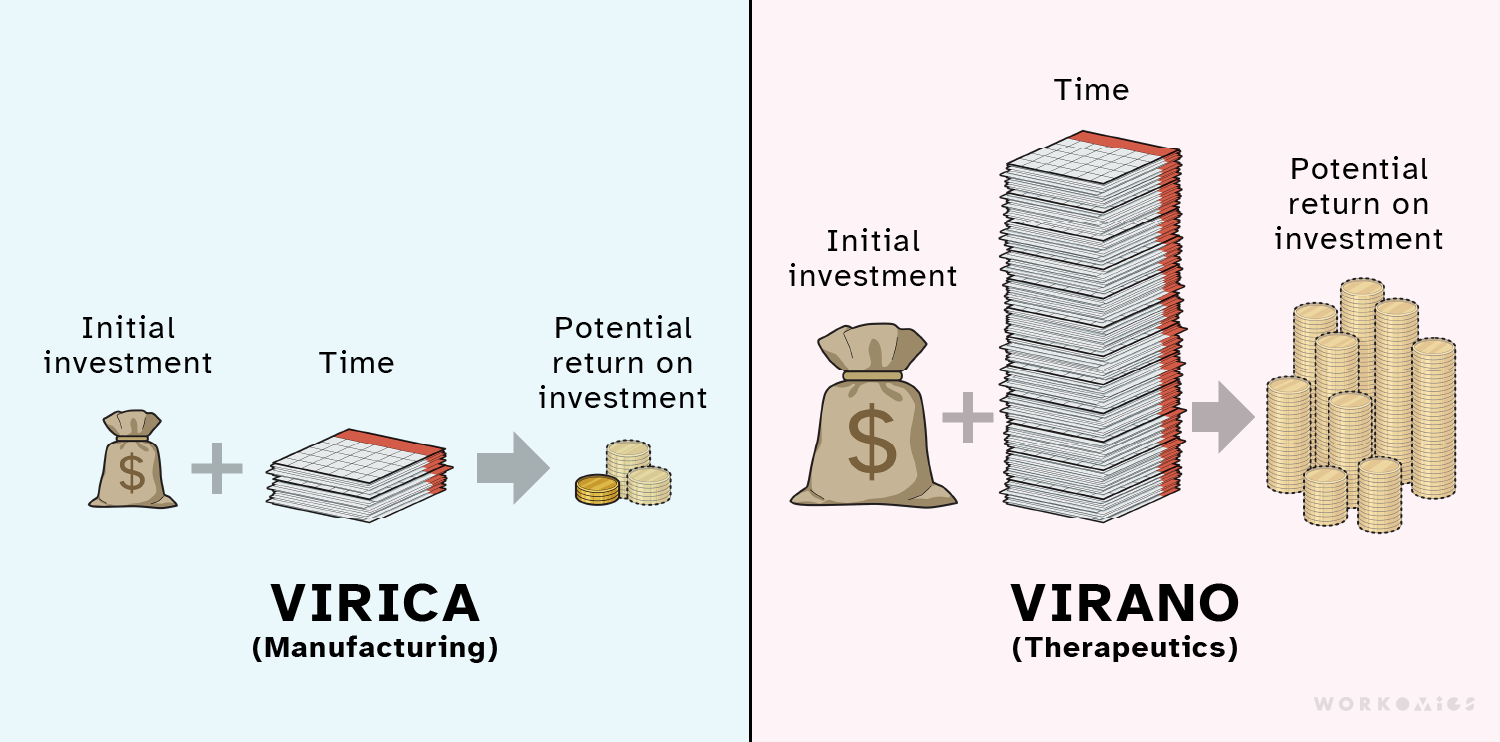
We had a lead investor for Virica on the manufacturing side, so we doubled down and focused there for a few years. Eventually, we reached a point where it made sense for me to leave Virica and focus full-time on Virano, to try and get that going. It was good timing from the perspective of Virica and how well-positioned the manufacturing business was, but it was bad timing for Virano. Virano was developing an enhancement therapy to make other gene therapies more efficient. But the market for gene therapies was really struggling and there wasn’t appetite for a product that worked alongside when there was so little enthusiasm for the gene therapies themselves. It wasn’t the right time.
The other piece that was hard is the other two legs of the stool — our scientist and financial person— were still focused on Virica, as they should be. I didn’t want to take them away from the work they were doing, but to make Virano a success, I needed more support on the finance and science side.
In the end, we gave ourselves a date to make meaningful progress with Virano, and when it passed, we decided to wind down the company. The therapeutic asset went back to OHRI, where they can apply for grants and continue to work on it.
The thing that you learn in this business is that you don’t want a company that doesn’t grow and doesn’t die, but just subsists. We would rather make a call and go through the pain of wind-down rather than avoid the pain and stay in that subsistence state.
WKO: It is hard, and it is painful, right?
EKS: It takes time to run something, so making the decision to stop is the right call if you believe you’re not going to reach your goals in the foreseeable future. Even as we were implementing this decision, we had to remind ourselves that winding down Virano should not be defined as “failing.” This was not about giving up; it was about us being thoughtful and making choices about where to focus. We made a decision, and a decision is not failure.
But you could also imagine that now we have a company on our record that didn’t get funded, didn’t go anywhere. To the extent that Virica is doing well and other things are going ahead, that’s good, but I feel that in Canada we are not so great at placing value on the lessons that come from even a perceived failure. Unfortunately, we don’t give people very many chances.
The people who have been successful, they get the chance to play again and again and again. But if you haven’t been successful in the traditional sense, the second and third chances are hard to come by. Realistically, that means it’s easier to give more money to someone who has sold a company and made lots of money; it’s potentially harder to give money to somebody he has had the experience of winding something down, even though there are all kinds of reasons why something doesn’t work out. The people who have had those “failure” experiences have learned so much. You want them to try again.
WKO: You are trying again. You have a couple of ventures you’re currently working to get off the ground. Can you tell us about them?
EKS: One is a very unique gene therapy approach and the other is more of a commercial consumer product opportunity.
With the gene therapy, we have exciting scientific data and smart, engaged people who have been working at the science for years. We see the unmet need and how it can help the world. But we also know it’s going to be a very long, slow build, with a lot of pre-clinical and clinical development for which we’ll need to raise a lot of money. I’ve been in gene therapy for a long time, so I fully realize how hard this is going to be. For me, I really like the idea of coming in to galvanize all these pieces and act as the translator between science and business.
On the consumer product side, I’m excited to do something that’s a little closer to the customer. I would love to try to sell something you can touch and feel.
With gene therapy, I’m selling you “blue sky” — something that will be wonderful in the future. With the consumer product, I’m selling you something concrete right now.
It was like that with Virica and Virano too. Virica was selling a manufacturing process that exists; Virano was a therapy we were going to develop. I like having both sides of that coin. It’s nice to be solving different problems and working with different people.
WKO: We’d love to dig a little bit more into the relationship side of things because the reason we’re having this conversation is that you’re a person who is very good at cultivating relationships — not just for yourself, but for other people. What is your philosophy, and how do you make time for that relationship work when you’re also busy operating companies?
EKS: With EKS Ventures, it all comes down to the relationships I’ve built over time. I’m not a person with a big pharma name on my CV, so people don’t call me to get a “pharma brand” that looks good for a start-up. I’ve just slowly, slowly, slowly built a network of people who trust me because they’ve worked with me, or I’ve helped them. I’ve taken a lot of time to cultivate that, and I really put a lot of emphasis on it. I keep having those conversations and building that network because who knows where it might go?
Pharma and biotech is a surprisingly small world and that helps with making time for it. There’s a standard set of meetings and events that you go to, and you end up building a network around those events. You see the same people every six months, and you stay open to it.
When I’m asked for advice about networking and connection, I always tell people not to just network “up”. It’s great to talk to the CEO, but get to know your peers — the people who are going to grow up with you. Eventually, they will be the senior decision-makers, and you’ll have known them for twenty years.
I also advise people to always ask “How can I help you?” No matter who you’re talking to, just ask that question. It’s memorable, and sometimes there is something tangible that you can do, which really cements that relationship. It goes back to my earlier comment about how I operate. I want to be involved in things where I feel I can help people. Let’s be clear: I want to run successful businesses and do well for myself, my partners, and my investors. But when I wake up in the morning, what I think about is how do I help, how do I make things work.
Our other ideas worth exploring
On journey mapping
Moving beyond customer-centricity theatre. An in-depth breakdown of journey maps and how to use them correctly.
The case for early investment in rare disease state education
An examination of reasons why disease state education for rare diseases helps patients better navigate their journey and complex decisions.
Bedside Manners: How a family doctor approaches patient education
An interview with Dr. Heather Senn, a family doctor, about her philosophies and strategies around patient education.