
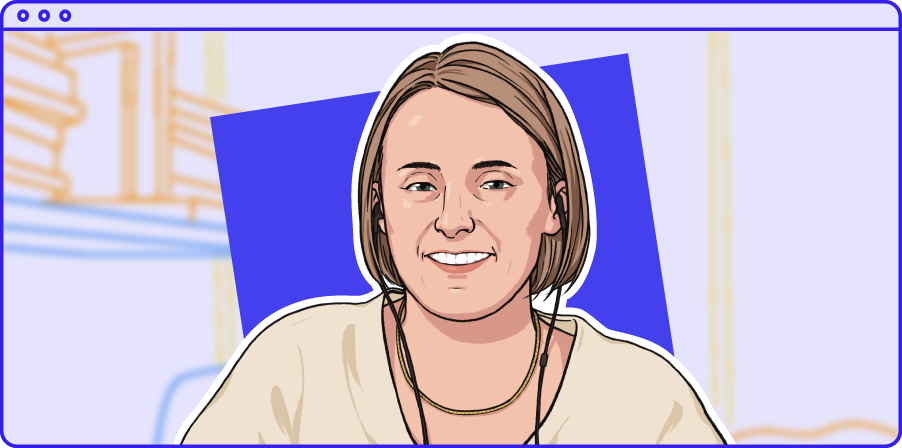
This installment in our Women’s Entrepreneur Series is an interview with Linn Vizard, the founder and design lead at Made Manifest. Made Manifest is a service design consultancy. The core of their business is consulting services, where they do projects with clients to improve a service, a process, or an experience. They also help organizations and individuals build service design capabilities. Linn also does a lot of speaking and writing to advance the discipline of service design, including her popular Ask a Service Designer newsletter.
In this interview, Linn talks about her broader business, but the conversation also has some very candid reflections about how it can feel to juggle a business and a seven-month-old all at once, as she was recently back-to-work after her own maternity leave.
WORKOMICS: To start, could you share a little bit about how Made Manifest evolved to be what it is today?
Linn Vizard: I sort of fell into running a business. I was at a moment in my career where I wasn’t really sure if I wanted to keep working in design. I went on a self-funded sabbatical to try and figure things out. During that time, folks from my network started reaching out and saying, “Hey, would you be interested in helping out on this project?” That was the start of it.
At that point, I thought it might be temporary. I put together a very rushed brand and website — enough to feel credible. After I’d been doing it for a couple of years, I realized it wasn’t temporary. I’m running a business, and it’s growing. That was the moment when I put some effort into branding, getting incorporated, and getting the business more formalized.
WKO: The name is great. How did you think about the name versus being something like ‘Linn Vizard and Associates’?
LV: That was something I really agonized over. It came down to wanting to build something that was more than just me. I paid someone to help me come up with the name. For me, if it was a name I had picked, I always would have been second-guessing it. By going through a structured branding process to select the name, it didn’t feel so impossible. There were a range of options and Made Manifest felt the most resonant to me.
WKO: It really evokes all the right things. Did you consider co-founders or going into partnership? How are you thinking of your team?
LV: At the beginning, I didn’t really think about a co-founder or a team, because it felt somehow safer and less of a responsibility to just be an independent free agent. It’s a lot of responsibility to support other team members and build great culture. That’s definitely changed because it’s hard to have the type of impact you want to have when you’re solo. And I do find it can be very lonely building a business as a solo founder — I sometimes wish I had a co-founder.
I really like collaborating with people, but many of my favourite collaborators are very happy doing their own thing and prefer working together on a project-by-project basis. It’s been fun growing that group of folks to collaborate with regularly. Then, starting in 2022, I added my first full-time employee, then a second, and I’m looking to grow the team further in the future. But I quickly realized that it’s unreasonable to expect a team member to play a partnership role, unless you’re specifically hiring them as a co-founder.
WKO: You’ve got plans to grow at a steady clip, so how do you define success for yourself and for the business?
LV: In the very, very early stages, I had a very practical benchmark: can I replace the income I had in my job by doing this? Once I was over that hurdle, I realized there were some big questions around design practice that I really wanted to work on: namely, how do you create good outcomes, beyond reports and recommendations? The business has become a vehicle for working on that.
Since I started doing this work, I’ve always been on a quest to figure out how to get things closer to implementation, to make things more real in some way. That’s been up and down — sometimes we succeed more than other times.
Success for me is that the business is a vehicle for learning and exploration. Some of that is around trying to practice design in a different, better way. Success for me is also about doing this work in a way that feels calm, collaborative, and creative. I think it’s really hard with the pressures of client work in a service-based business. Hard, but not impossible.
Longer-term, I think success looks like being able to offer more entry-level or internship positions. I really believe that the field of design needs more apprenticeships — paid opportunities to learn on the job. But when you are a smaller firm, it makes the most sense to hire seasoned folks, who have enough experience to be independent and need less in the way of support or guidance. Right now, my business just can’t support the level of training and growing that an early-career person would need. It’s a goal of mine to grow to be the sort of business that can help foster young designers.
And then the last aspect I’m very curious about is ways to do business that feel ethically aligned. I am trying to think about ways to structure a business that are supportive to the team, to the clients and the people you serve, and also a broader set of interests like the planet and the environment. One of the ways we do this is that Made Manifest is a 1% For The Planet* member. I’m also really interested in things like B Corps†, because it is a conundrum. How do you do all that and make money?
WKO: We’ve been following the measures to introduce employee trusts, because they’re a really interesting model for professional services, where ultimately, the thing that you are selling is people’s time and ingenuity.
Ok, so: Made Manifest started as just Linn. Then it’s Linn plus one, Linn plus two, and maybe eventually it’s Linn plus a lot more people. Does your definition of personal and business success start to diverge, or do you deliberately try to keep them together? What’s the interplay?
LV: I think the honest answer is I’m not too sure. It’s a transition, separating your identity from the business’s identity. It’s healthy and needed, but tricky. I did have the experience of going on maternity leave very suddenly, because my son arrived prematurely. And from a business perspective, that was actually a good reality check. The business can run without me: the projects got done, the clients were happy.
But the business was actually the first time in my life that I took an experimental approach to my career. It was very refreshing, because it gave me permission to just try things out and respond to the opportunities as they appeared. Previously, I’d always been someone who has all the steps mapped out. Of course, the downside of experimenting is that it’s hard to keep that mindset while also being intentional about a definition for success. It’s an exercise in finding the right balance between letting the business respond to external forces, versus driving towards a set vision. To date, I’ve taken it very day-by-day, month-by month, and I’m enjoying it so much. If I’m not enjoying it in the same way, then maybe that’s the signal to be more intentional about the longer-term direction.
WKO: Let’s delve into the topic of business ownership and motherhood. As we’re speaking, you have a seven-month-old. Can you speak about how that has shaped the way you think about your work and your business?
LV: This is still something I’m actively processing. We didn’t really talk about it earlier, but part of the motivation for me in launching the business was wanting to show that different paths are possible. When you look at design generally, something like 75% of the workforce is women, but most of the owners and bosses are dudes. I wanted to build an alternative and show people that different things are possible. Becoming a mom is part of that.
I had people say to me, “Now that you’re having a baby are you going to go take a corporate job? You’re going to stop that little freelancing thing you’ve been doing, right?” I was really lucky that early in my career I worked at Usability Matters, a company that had three women founders, two of whom were mothers. That was huge for me, in terms of feeling confident that the business was compatible with motherhood. I wanted to keep running my business. That was hard because I took quite a short maternity leave in the Canadian context, where the norm is for women to take a full year.
I had planned a four-month leave, but ended up taking five months because my baby was born early. As a business owner, I wasn’t eligible for maternity benefits‡, but my partner took a full year of paternity leave. Right now, I’d say I’m working 70-80% of a full-time week, but when you’re running your own business, there’s never a clear-cut workday.
I was also surprised because I had been very convinced that biology is not destiny. Carrying, birthing and breastfeeding a human was a bit of a rude awakening on that front. When people talk about the mother-infant dyad, there is a true biological intertwinement. Perhaps that should have been obvious, but I underestimated the biological, hormonal component — the delicately balanced system of mother and infant, that requires being close to one another.
WKO: How are you managing the workday now?
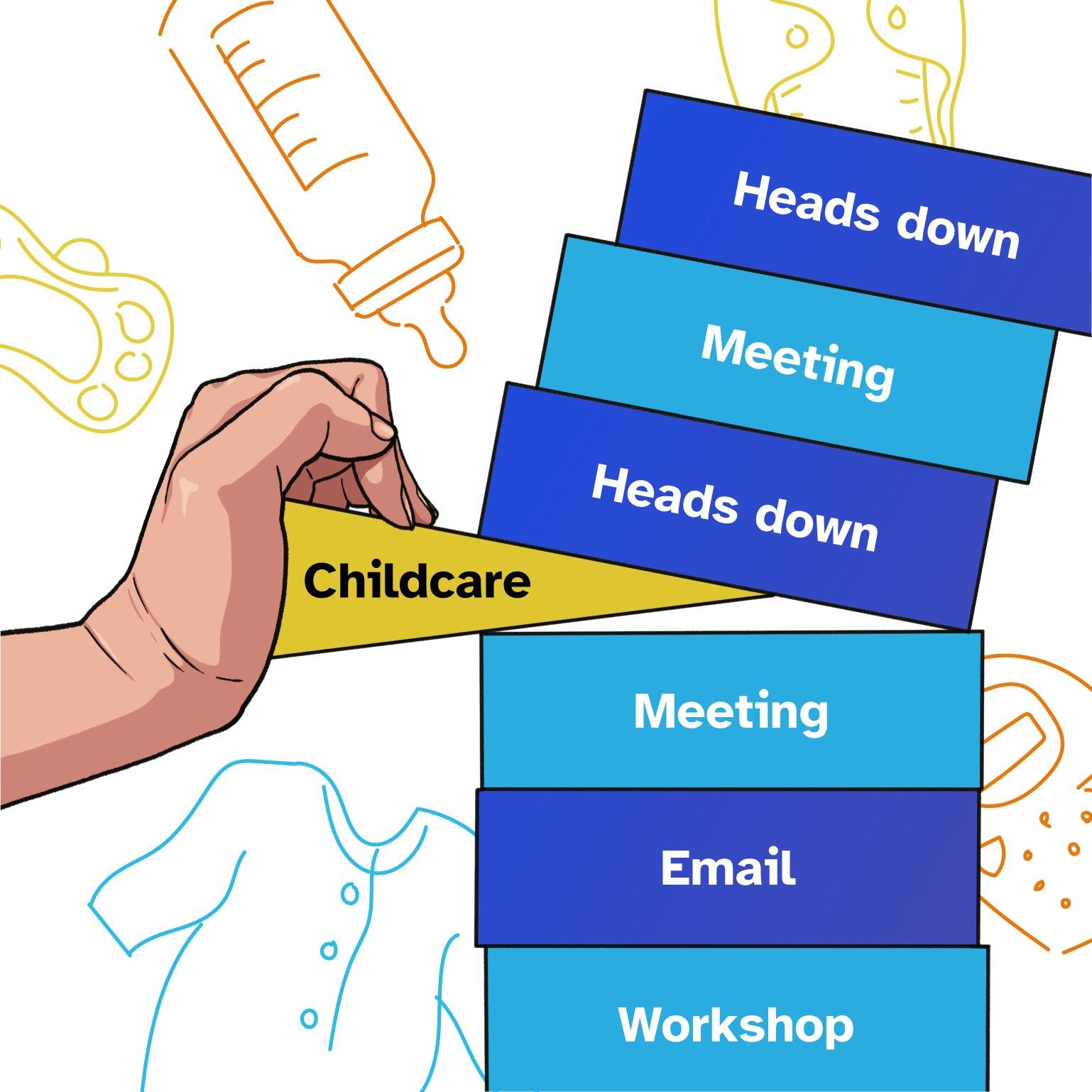
LV: My hours are dictated by the needs of the business and the clients. I used to be super controlled, super structured, but having a baby has taught me to be a lot more fluid and go-with-the-flow. I am working from home, which is a double-edged sword.
I feel really grateful for the flexibility to get on a call, run a workshop, breastfeed, take more calls, change a diaper at lunch, give my partner a break from the baby. Sometimes there is guilt about how much time I’m spending with the baby — It can feel like I’m half-assing being a mom and half-assing running a business. But most of the time, things are very integrated, in a way that feels good.
The negative side is I do feel very pulled in many directions, and it can be very difficult to focus. I have this time confetti, where I’m trying to squeeze so much into little splinters of time. I can see the appeal of getting up, leaving the apartment, and working from 8 until 6. But that kind of clear-cut work time is most often afforded to men. I’m grateful for the flexibility and integration that I have, but I do think there’s a cost of socialized expectations on women to do and be it all.
WKO: Do you read Anne Helen Petersen? She had a piece on about men going golfing for six hours out of the house, while more stereotypically female hobbies happen at home where you can take care of child minding or domestic tasks.
LV: That’s exactly what I was thinking of. I feel like that, but for work. The conclusion I’ve come to is that our societies are broken in a way that doesn’t set women up for success. Especially with infants, there are biological realities mothers have to manage. Breastfeeding is not a structured, rigid thing. It’s very fluid and organic. The ideal would be having society set up in a way that supports women in that, rather than penalizing them. It’s a holistic valuing of care, which is a lot of what Anne Helen Petersen writes about.
For me, it’s really a mix of feelings. I am incredibly grateful to have a partner who took a year of paternity leave, which is actually still really rare. I have found it very helpful postpartum to spend time in a domain where I feel competent and confident and have a sense of identity — my work and business. But it is really tricky as I’m trying to mix in that more schedule-based work of running a business with the fluid, organic work of feeding and caring for an infant. Right now, it feels like the identities of mother and business owner are so dominating, that that’s all there is room for, but I try to tell myself: it’s temporary.
WKO: How do you imagine the role of motherhood plays out differently as a business owner compared to being an employee, especially once you’re back to work with a little human to care for?
LV: There’s an Adam Grant podcast. He talks about integrators — people who don’t mind blurring the boundary between work and home. In contrast, segmenters have a strong desire to separate business and personal life. I think that as an entrepreneur, it’s much easier if you’re an integrator. The flexibility you get from being an integrator and being your own boss is great. However, the trade-off is being pulled in a lot of directions and maybe finding it harder to fully switch off.
I think as an employee, even though I had environments that were supportive and encouraging, it wasn’t the same level of autonomy or locus of control. I do miss being part of a bigger workplace. I miss the ambient social interactions and social group. But as a business owner I have this very nice feeling that it’s OK to fully be myself.
* Organizations who join 1% For the Planet commit to donating 1% of annual top-line revenue towards environmental work.
† B, or Benefit Corporations have a corporate governance structure that is accountable to all stakeholders (not just shareholders) and go through a certification process that assesses their social and environmental performance.
‡ In Canada, parental and maternity benefits are administered through the Employment Insurance (EI) program. If you own more than a 40% stake in a business, you are not required to participate in the program, and are ineligible for regular benefits due to job loss. The government does operate a program whereby you can register and opt in to paying premiums; if you’ve registered and started paying in at least 12 months beforehand, business owners are typically eligible for “special benefits” including parental, caregiver, and sickness benefits. If you register and receive special benefits you are required to continue contributing EI as long as your business remains operational. For owners of corporations, it is often not financially advantageous to participate in such a program, compared to the alternative of paying yourself from retained earnings during a leave.
Our other ideas worth exploring
“I want to hang my hat on me”
Krista Lee Hynes, co-founder and managing partner at Ignite Financial, talks about her journey from theatre to financial planning, and why she has always bet on herself.
A new comfort zone
Shiri Levy, co-founder and Chief Scientific Officer at Histone Therapeutics, talks about building a biotech to bring a genetic medicine to market.

Running shoes designed for women
Lindsay Housman, CEO of Hettas, talks about researching and designing a running shoe specifically for women, along with her philosophy on flexible work, and the challenges of fundraising as a female founder.