
Among the patient stories shared in the NORD 2022 Voice of the Patient Report on Post-Transplant Lymphoproliferative Disorder, one story in particular gave us pause. In it, a patient described the abrupt transition from having “no options” and a year to live, to learning just weeks later that they were an ideal candidate for a curative clinical trial.
The turning point? Their oncologist happened to attend a specific conference. As the patient reflected:
“I’m still very surprised that I went from hearing from my primary trusted oncologist that I had about a year to live to a matter of a couple of weeks later him saying, ‘Well, I went to this conference, you see. And gee, they have this clinical trial that’s absolutely perfect for you. And you stand an excellent chance of being cured.”
One wonders what would’ve happened if he hadn’t gone to that conference. And it seems from people’s responses that this is not an unusual state of affairs, that people don’t seem to be aware of clinical trials that are going on.
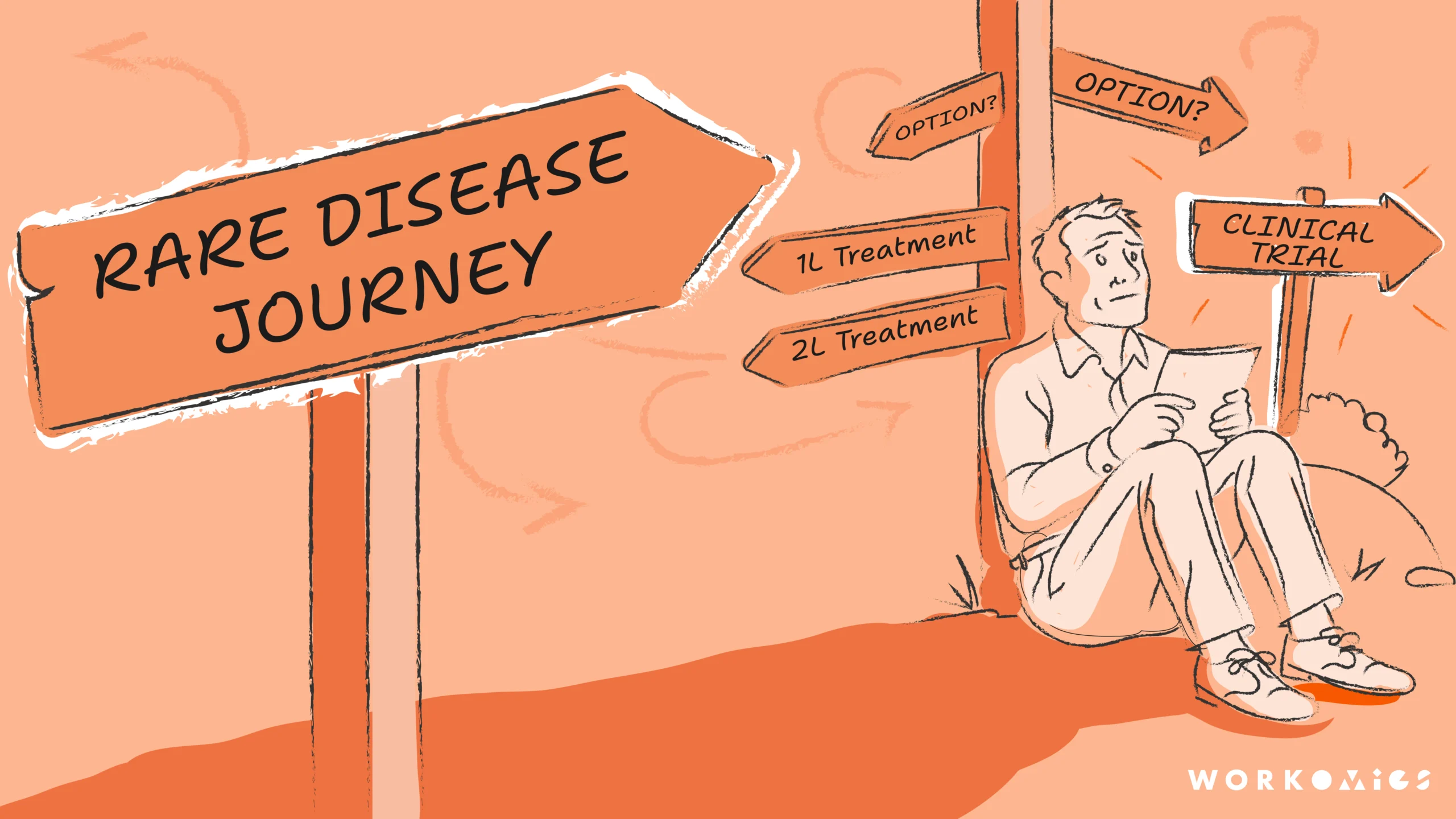
This story underscores a central challenge for sponsors of rare disease clinical trials: recruitment. Connecting breakthrough scientific progress with the patients who stand to benefit is all the more difficult when populations are small and scattered across fragmented health systems. While HCPs are often on the lookout for new trials, it is unrealistic to expect any clinician to have complete, up-to-the-minute awareness of every emerging trial. This is where a direct-to-patient strategy can close the gap.
A right-sized, focused, and flexible paid media strategy—prioritizing the digital platforms where patients already engage—can help sponsors build awareness for their trials among patients and families. This is an opportunity to deliver relevant, credible information directly to the patients who are actively seeking it, enabling emerging treatment options to be found by design, rather than chance.
We’ve seen much success with these relatively lean, digital approaches in rare disease patient education, across both disease state education and clinical trial awareness campaigns. Check out our related case studies about Creating disease state awareness with cost-effective paid search and Supporting greater diversity in clinical trial recruitment.
Our other ideas worth exploring
Patient-centred communications in pharma and biotech
The Universal Patient Language (UPL) is an example of how a pharma company can create effective patient communications.
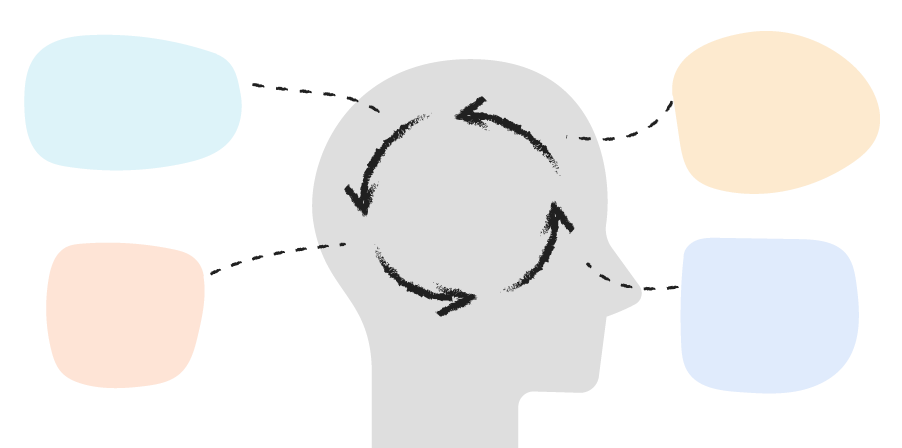
Treatment Decision-Making: A Framework
Commercial pharmaceutical teams should examine an array of factors that shape treatment decision-making to influence prescribing behaviour.