
An employee asks about a workaround for the team’s weekly meeting. She drives her mother-in-law to stroke rehab that happens at that time.
An employee needs time off to go stay with his mother overseas, who lives alone and will need help in the first few weeks after knee replacement surgery.
An employee works an 80% work schedule. She spends her day off caring for her mom and preparing for the week ahead, so that she can better balance work and caregiving the other six days of the week.
Real people, working mid-career knowledge jobs while balancing caregiving responsibilities*. These are just the ones that emerged in our team’s orbit over the last week.
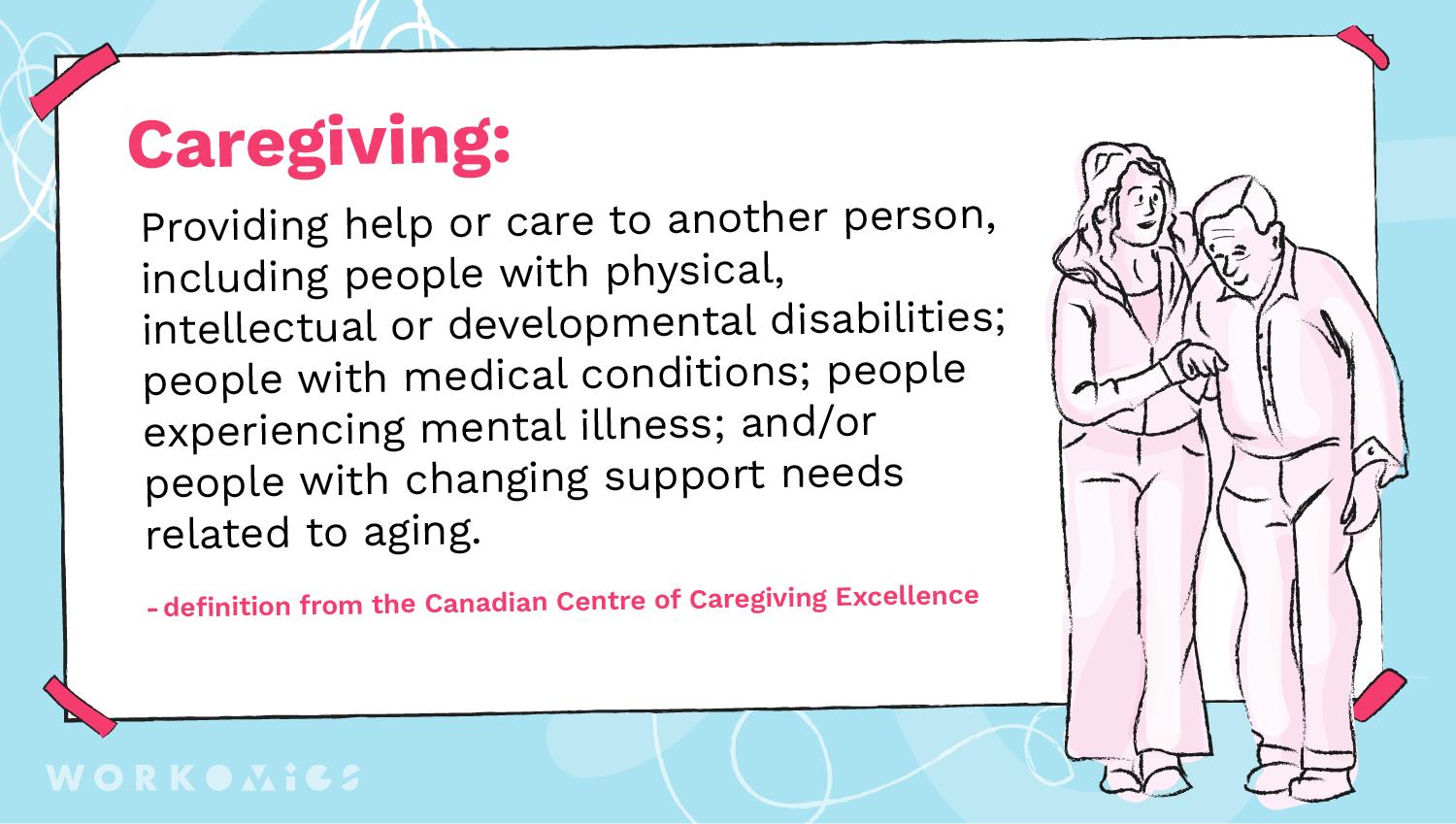
Meanwhile, households are getting smaller, people are retiring later, and more people (specifically, more women) are in the workforce. The math is inevitable: employees with caregiving responsibilities will increasingly be the norm.
Balancing caregiving and paid work
Balancing paid work with caregiving is difficult. Eighty percent of employees with caregiving responsibilities said it negatively affected their productivity. How could it be otherwise? Caregiving is physically, emotionally, and mentally draining. For caregivers who work full-time, the average daily time spent on caregiving tasks is 4.5 hours. Add that on top of an 8-hour workday and it’s no surprise caregivers struggle to consistently perform their best at the office. Indeed, the burden of the two roles proves too much for many caregivers, with nearly one-third of workers reporting they chose to leave a job because of the difficulty in balancing competing demands from work and caregiving.
Employers, for their part, often profess a desire to be supportive of employees with caregiving responsibilities. Many employers offer a mix of benefits†, ranging from “accommodative” (benefits that don’t incur additional costs like flexible work schedules, working remotely, reduced schedules), to “appropriative” (offerings that require additional spending like elder care subsidies, care provider referral services, counselling services). However, other than flexible work hours, most benefits are only offered by a minority of employers. When benefits are offered, uptake is low. Often, awareness of the benefits are low, but employees also worry that taking advantage of accommodative benefits might negatively impact how they are perceived and rewarded at work.

In fairness to employers, when employees are actively managing caregiving responsibilities, lower job performance is likely. Over the long run, research shows that caregivers bring advanced skills in areas like empathy, time management, and teamwork. But during moments of intensive caregiving, employers aren’t seeing the benefits of those skills. Meanwhile, to the extent that employers offer appropriative support, the business will incur additional costs. That might create a temptation to gravitate towards employees without caregiving responsibilities who require less in the way of either accommodative or cost-incurring benefits.
Except, where will you find these employees? With all the structural trends, at least half of the workforce will be in a caregiving role at some point in their working life. If your organization does not support caregivers, you will be shrinking your talent pool, to your detriment. Research suggests that senior staff — the ones who are hardest to replace and have the largest organizational impact — are disproportionately more likely to leave a job because of care commitments.
The maternity leave analogue
An obvious analogue for caregiving is maternity leave. Fifty years ago, maternity leave in Canada was 15 weeks of benefits funded through what was then called Unemployment Insurance. As workers lobbied and negotiated for more robust paid leave policies, organizations worried that it would be too expensive, or that it would lead to women having more pregnancies because the benefits were in place.
That is not dissimilar to the status quo for caregiving benefits. Since 2017, Canadian employees can access caregiver benefits through the government’s Employment Insurance program. Like the initial 15 weeks of maternity leave benefits, the caregiving benefits are better than nothing, but the duration is still relatively short and doesn’t cover every situation. The employee is left to navigate it alone, while juggling caregiving responsibilities, as most employers are reluctant to provide information, citing a lack of familiarity with the details.
Today, Canadian maternity and parental leave benefits are far more robust than when they first rolled out. Benefits are available for 50+ weeks, and eligibility has expanded. Many companies offer “top-up” payments on top of the EI-funded benefit, as a way of attracting and retaining talent. HR departments are experienced at administering the programs, while the government has developed streamlined online applications. Old fears about the cost of the program or “excessive” uptake turned out to be unfounded.
Parental leave is not a perfect analogue for caregiving leave. When it comes to babies, the averages are not a guarantee, but they are a helpful guide. Mostly, parental leaves can be planned for, and infant development follows a predictable (if imprecise) set of milestones. A new baby is generally a happy event, widely announced and celebrated, and the relationships are clear-cut. Many people may help welcome a new child, but only the parents take leave from work.
Caregivers, by contrast, are sometimes thrust into their roles without warning. There is very little predictability to caregiving demands over time. Care needs might be stable, progressive, or episodic, and each of those might require different accommodations or support. The time horizon for caregiving is open-ended, with an average of 4.5 years. Caregivers tend to keep details private, and while it can be a rewarding role, it is often one tinged with sadness, grief, frustration.
Caregiving relationships are also more varied. An individual might provide care for a parent, sibling, spouse, adult child, or friend. Equally, they might share caregiving with multiple people, or not.
These differences notwithstanding, the evolution of parental leave provides a template for what might be possible in the realm of caregiving leave — a foundation of well-known, publicly-funded benefits with near-universal uptake amongst eligible employees, with many employers voluntarily providing varying additional supports as a way of competing for talent and supporting employee well-being.
If that is the destination, maternity leave equally helps us understand a possible path to get there. It was 30 years after the first maternity leave provisions before parental leave was extended to a full year, and further adjustments have been ongoing. Collective bargaining in unionized workplaces was critical to making maternity leave top-up payments a standard. Even today, parental leave policies vary wildly across organizations, with some offering no top-up whatsoever while some offer a full year at full pay.
What can organization do now
For now, there is a wide gap between the way EI-funded leave addresses the needs of new parents compared to the needs of caregivers. Meanwhile, you certainly have caregivers working in your organization right now, who would benefit from support. What does a caregiver-friendly workplace look like today?
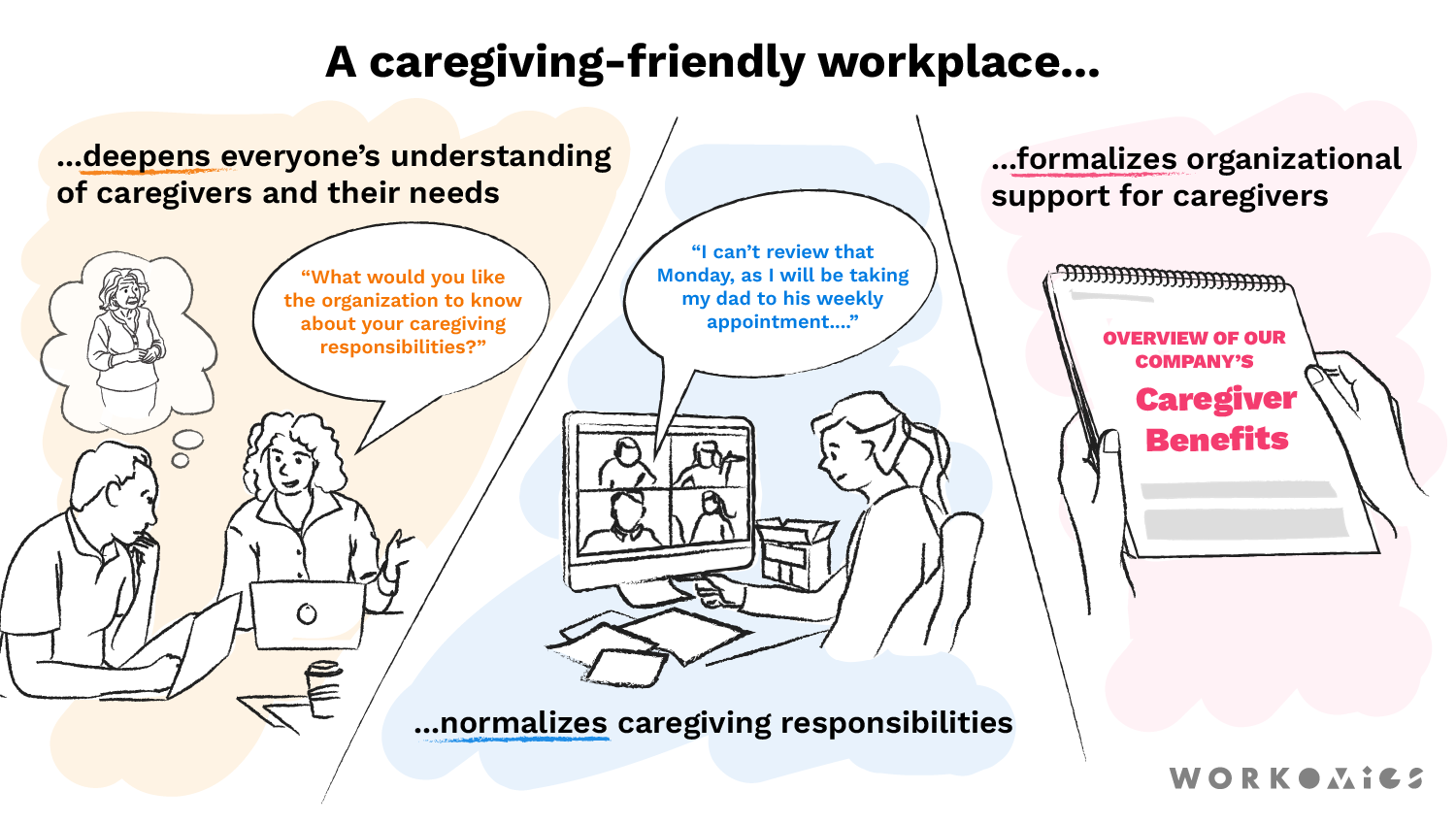
Deepen everyone’s understanding of caregivers and their needs
One of the most striking things in the caregiving literature is how poorly employers understand the needs of their employees. Organizations consistently underestimate the proportion of their workforce with caregiving responsibilities, and the extent and range of those responsibilities. There is also a tendency for people to see “caregiving” and jump to “childcare.” Parents of young children are quick to share the demands they juggle, while caregivers to adults tend to be more private about their situation. That can contribute to caregiving being underrepresented. A clear definition that delineates them as two separate spheres can help the organization get a clearer picture of the caregiving responsibilities of their workforce.
At the individual level caregiving is so varied, so it’s important to understand the specifics of each situation. Many caregivers are reluctant to share details, however, because it’s the health information of another adult, whose privacy ought to be respected. A question that can help: “what would you like the organization to know about your caregiving responsibilities?” The answers to that question can help the organization develop solutions. Sometimes, something as simple as rescheduling a key meeting can make a big difference. By understanding the extent of an individual’s specific caregiving responsibilities (and how they evolve over time), managers and HR teams can tailor their support to a caregiving employee’s specific needs.
Normalize caregiving responsibilities
Employees are reluctant to speak up about caregiving responsibilities because they fear the consequences. That can create a negative reinforcement loop where uptake is low, the need is underestimated, organizations under-invest, and caregivers are undersupported. When under-supported, caregivers struggle at work. Those struggles can further entrench stigma around caregiving and make caregivers even more reluctant to share their caregiving situation or ask for support.
To break that cycle, leadership needs to be proactive in creating an open culture around caregiving. Very likely, there are senior leaders in your organization currently dealing with some aspect of caregiving. If they speak openly about their responsibilities and how they are balancing their workloads and accessing benefits, it makes it easier for others to speak up and get the support they need.
Formalize organizational support for caregivers
Many of the accommodative benefits that caregivers most value may already be in place at your organization — flexible hours, reduced schedules, remote work, unpaid leave. Framing these explicitly as part of your organization’s caregiver benefits can make it easier for individuals to ask for them.
Canadian employers can also proactively communicate about the EI program’s caregiver benefits. HR administrators are not as familiar with the program as they are with parental leave benefits, but employees juggling work and caregiving duties will find it especially difficult to navigate a new and unfamiliar program, so any organizational support is helpful. Over time, awareness and familiarity with these programs will grow, making them easier for everyone to access.
Think too about the broader cultural signals your organization is sending. When an organization insists that everyone must be in the office five days every week (or else), it sends a strong negative signal to caregivers who rely on working remotely to balance work and care. Workloads really matter too. If you assign people to work with the goal of resiliency in mind, then accommodations for caregivers are easier to manage. If, instead, you staff as few people as possible and assume AI will get you to maximum output, accommodating caregivers will be much harder. Supporting caregivers is antithetical to the current tenor in a lot of organizations, so if you are currently insisting on face-time or shrinking the workforce, it will take a lot of conscious and deliberate counter-programming for that to not translate into a hostile environment for caregivers.
Finally, based on what you know about employee needs, think hard about the appropriative benefits that might make sense for your organization. Your organization is almost certainly incurring costs due to caregiving—presenteeism, employee burnout, turnover. They just don’t show up as caregiving-related on the bottom line. If you can get a clear picture of the true organizational costs of caregiving, it’s easier to build a business case for benefits that cost real money, but help caregivers better balance their care responsibilities and perform well at work. For many caregivers, paid work is a welcome reprieve from care work, and programs like provider referrals, respite care, or cost subsidies can help them be more productive in the office and provide better care to their loved ones.
† All of the data on benefits is from a Harvard Business School study of US employers.
Our other ideas worth exploring
Calibrating constraints
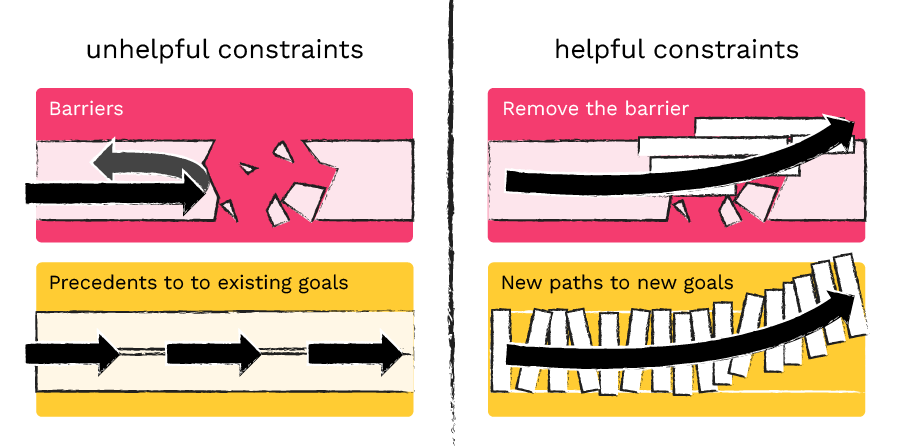
A discussion about the nature of constraints at work, focusing on their benefits and drawbacks, and tips for working within their bounds.

Co-creation and the ownership effect
An examination of the challenges of balancing paid work with caregiving responsibilities, with suggestions for how to create a caregiver-friendly workplace.
Co-creation helps stakeholders think about the details
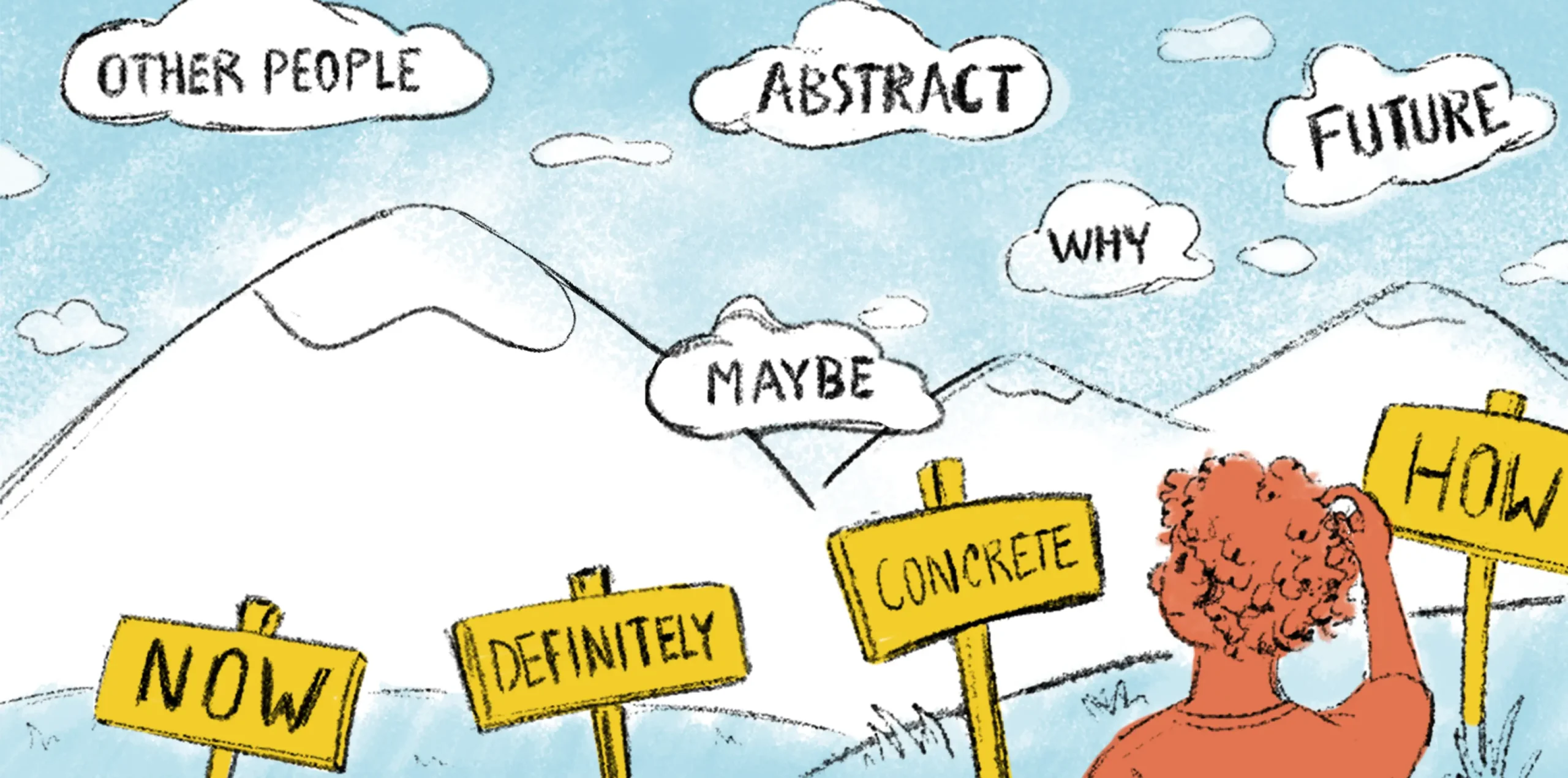
Introducing Construal Level Theory (CLT) and its implications for how we use co-creation to support change management with stakeholders.