
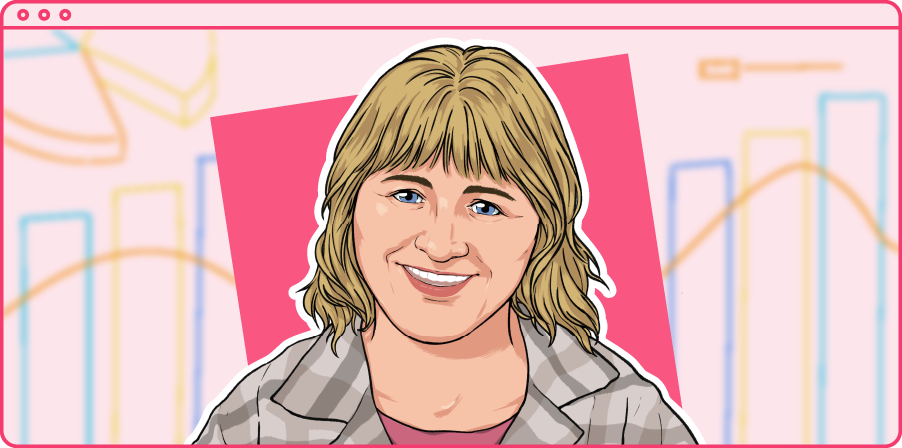
This instalment in our Women’s Entrepreneur Series is an interview with Krista Lee Hynes, co-founder and managing partner at Ignite Financial. Ignite is a holistic financial planning business based in Newfoundland. Alongside Ignite, she has an independent practice of financial counselling and empowerment, and partners with other entrepreneurs to conduct events.
In this interview, Krista Lee shares how she went from theatre major to financial advisor, how she made the decision to set up a corporation with her business partner, and how she folds community impact into her work.
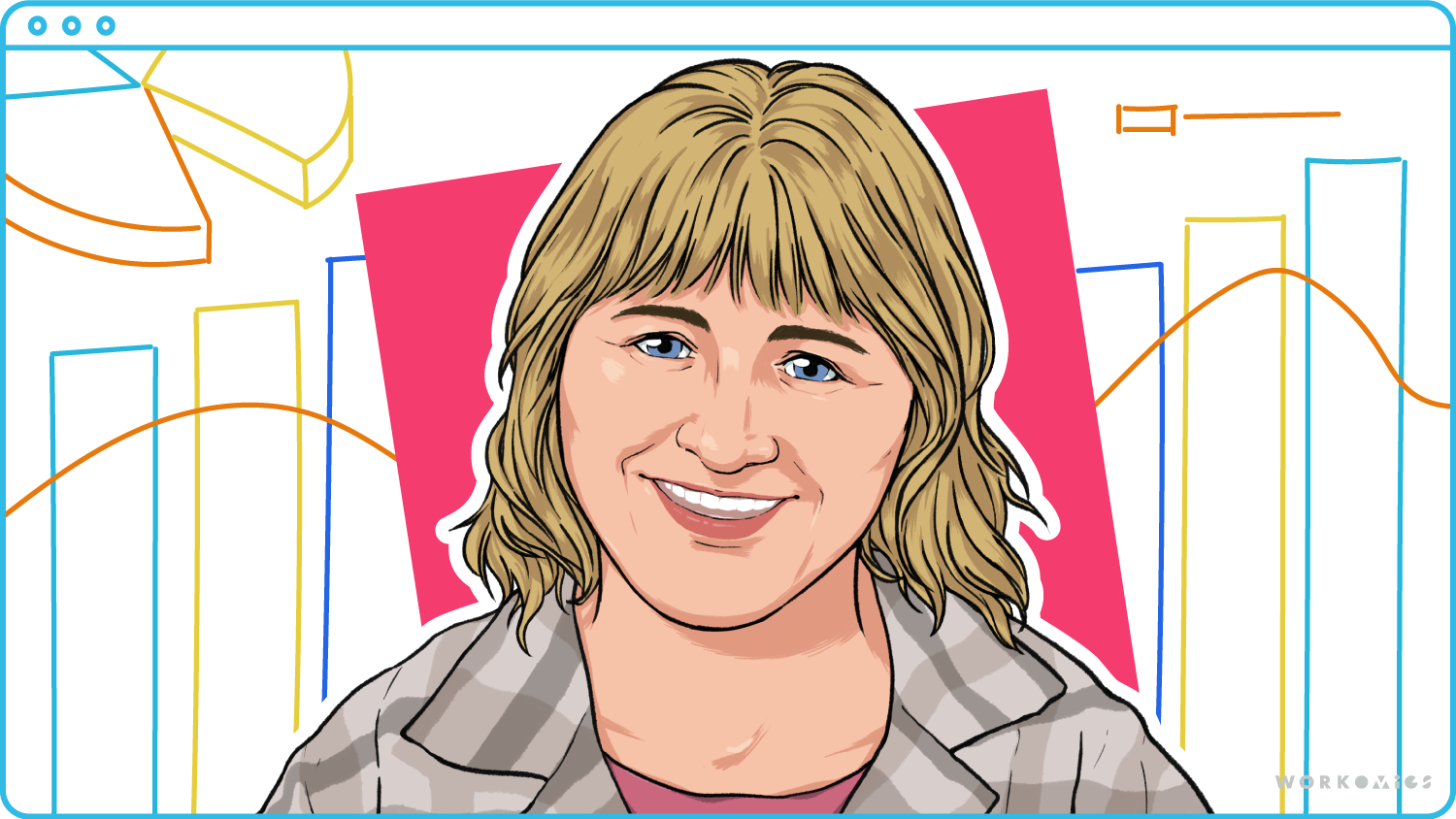
WORKOMICS: Why don’t you start by telling us a little bit about your professional journey, and what led you to where you are right now?
Krista Lee Hynes: My professional journey seems to rewrite itself every year or so. I’ve always been very entrepreneurially-minded, but when I was in grade six, I decided I was going to do theatre. (I didn’t realize that there was such a thing as business school.) I’m very glad that I did theatre. I learned a lot about myself, honed my public speaking, got over tons of odd little insecurities, and met some lovely people. But I was only halfway through my first year when I realized, “I don’t wanna be an actress for the rest of my life!”
That was when the entrepreneurial spirit kicked in. I opened up a small theatre production company and did a couple of small stage productions over a couple of years. After that, someone approached me about developing a theatre program for kids, which ended up being its own venture with another woman. That helped me understand the more administrative side of running a business, but the two of us were the be-all, end-all of the business. I got burnt out, as tons of entrepreneurs do. I was done with being my own boss and having to make my own paycheque, so I took a job doing marketing and sales for a local radio station.
All to say, I came to financial planning from a unique perspective. I’ve been in the industry for 14 years, so it’s definitely the thing that has stuck the longest.
WKO: Tell us more about those 14 years. How did you go from “I’m going to get into financial planning” to starting Ignite Financial?
KLH: Most people get into finance either with a bank or an umbrella firm like Sun Life or IG. I didn’t want to go the bank route because I knew I wanted to be able to build my own firm out of it.
I started as an individual advisor under Sun Life Financial. I was looking up names in the phone book, trying to convince people who knew me as “Theatre Krista” that I know what I’m talking about. I was also female and relatively young—in my late 20s. I once met a client in the mall with his dad, and he said, “I can’t believe you’re letting a woman handle your money.” People would wonder what would happen if I had a baby. My own father thought I was crazy for the first couple of years, because as an entrepreneur I wouldn’t have any maternity leave income.
And sure enough, I was less than three years into building my business when I did get pregnant. so everybody was right. (No, just kidding.)
WKO: Kidding aside, how did you navigate that period?
KLH: Early on, I got a piece of really good advice: the minute somebody can do work that you’re doing for cheaper than what it costs you to do it, then you need to hire. I was getting a lot of meetings, getting in front of people, doing a good bit of business. I didn’t have time to make follow-up calls and confirm appointments, which was resulting in clients missing meetings. So, I hired someone for a few hours a week at minimum wage.
When my daughter was born, that employee was there to keep things afloat. I took six weeks off and my husband, Drew, God love him, took paternity leave for the rest of the time. I dove back in and I did all of the work things. Drew would bring my daughter in and I would breastfeed her in my office in between meetings and have a little bit of baby time. I definitely took less time than I should have, but because I was so new, it was a crucial time for building my business.
I made compromises in the business too. I had been working on my CFP designation, because I felt that education was really important to building my credibility and my business. But sleep deprivation doesn’t make for a good student, so I put that on pause. I just kept showing up for my clients and making sure that they understood how I could help them, and that I was here for them if they had any questions.
When my daughter was around a year and a half old, I resumed the CFP. That’s when things really changed for me. Financial advisors are a dime a dozen. When I had my CFP, I could talk about stuff that not everyone else necessarily can. That gave me a competitive edge and really helped me build my practice.
WKO: Your business is an interesting setup in that you’re under a well-known name, but actually, it’s all on you. There’s $0 of revenue unless you go and get it. And so, it’s really starting from scratch in a brand-new industry. It’s a big leap of faith.
KLH: It was. Actually, this is something about me that maybe makes me a little bit weird, but I don’t feel fear when it comes to business. If I look at something, I don’t immediately think about all the things that could go wrong. I’m really excited and passionate about the opportunity, and what might happen if I put my all into it. I can just see all the good things that can happen.
I don’t want to sound cocky or conceited. I genuinely see it as my Achilles heel in some ways. But what is the worst-case scenario? I’ll go get a job somewhere. I didn’t have the fear at the outset that I probably should have.
In those early days, all I had to lean on was the Sun Life brand. People didn’t know me, and the ones who did weren’t taking me seriously. I could bring a more senior advisor from Sun Life to sit beside me on key meetings. That gave me an authority and legitimacy that maybe I wouldn’t have had on my own.
But even so, I realized very quickly that I didn’t want to hang my hat on Sunlife. I want to hang my hat on me. I always want to rely on myself. My husband tells me I’m a horrible employee. It’s true. I don’t like having to wait on other people to get things done. I don’t want my security or my well-being to rely on anybody but me.

WKO: Tell us more about the decision to go into partnership and form Ignite.
KLH: My business partner approached me. He had a block of business he was looking at buying from some retiring senior advisors, but it was too big for him to do by himself. He thought we would work really well together. I knew the blocks of business he was buying, and I felt honoured that somebody saw what I was doing, liked what I was doing, and wanted to launch something together.
Of course, we had a lot of conversations before we went ahead. We started with an informal alliance to test the waters and do our due diligence. The biggest thing for me was understanding his core values. What’s really important to him? Is he going to be a complete workaholic and in the office all the time and expecting me to miss things with my family? Do we have the same philosophy on employees? I’m always very invested in staff. I want to make sure they are well-paid, and I want to make sure we have enough of them. I don’t want to be doing something that someone else could do better.
If there was one challenge, it was how we communicated at the beginning. We weren’t great at it, but we were both very open to working on it, and we never “went to bed angry,” so-to-speak. Our ability to both have the arguments and work through them was really reassuring to me.
We worked alongside each other for two years before buying the business and we’ve been together ever since. For me, a big part of being a business owner is building something bigger than yourself. Together, we can build something bigger than either one of us could individually.
WKO: You also have a financial empowerment practice, which is a little bit different. Can you tell us more about that?
KLH: I’ve added a financial counselling practice within the last year, because I saw a real need. That practice is really about the mental and emotional blocks that we can create or that can be created for us through debt, a death, divorce, or any transition in life. We work on debt management from a practical perspective, but we also talk about your relationship with money and the human behaviour side of it.
I’m trying to poke money into existing spaces for wellness and self-care. Physical health, mental health, and financial health are inextricably linked. From my work in finance, I see that women, gender-diverse people, and people in racialized and marginalized communities are always hit the hardest when it comes to finances. I’ve worked with other entrepreneurs to bring financial wellness into existing events.
My counselling clients are exclusively female. Women have had more restrictions on our access to lending and financial services. Until the mid-1970s, we had to have a husband’s or father’s signature to be able to open a bank account or a credit card. Statistically, women have less investments than men. Women entrepreneurs have less access to funding. Many of us will have more time compression and time gaps in our career journeys. We need some empowerment within this community to give people the voices and resources, so they can advocate for themselves on financial matters.
WKO: The business model is obviously very different between counselling and wealth management because the clients have very different abilities to pay. We’re curious how you think about that.
KLH: I’m very interested in social enterprise and the running of social enterprise. That’s where I feel the next big leap for my journey is going to be.
We have a huge housing crisis in Newfoundland and Labrador, as we do in most of Canada. To me, it all links back to finance. If someone is paying an exorbitant amount of rent, of course they will have problems with debt and financial security.
But to me, it’s not just about individuals managing their money. It’s also about exploring the deficits within our community that prevent people from building financial wellness. If I’m really going to help people, what are the opportunities where I can help people rehabilitate and find that financial security?
WKO: What does success and legacy look like for you and your business?
KLH: To me, success is being able to take care of your family, but also being able to take care of your community. You are never just one person. Every decision we make has ripple effects locally and globally. Success to me is being able to live in accordance with that value.
We don’t often take time to sit back and say “what is enough?” or “what is satisfaction?” That has been my biggest shift in the last few years: to really define those goals. People tell me all the time that retirement isn’t achievable. Usually it is, but you have to understand exactly what it looks like and put in the work. But then you also can’t keep moving the dial. For me, once I hit that goal, I can give some of that back. I don’t need to keep it all for myself. When my daughter is older, I want her to be exceptionally proud of me and the good things I’ve done in the world. That, to me, is legacy.
Our other ideas worth exploring
Throwing out the instruction book
Melissa Williams, founder of Simply Patient, discusses why patient-centricity can be challenging in pharmaceutical companies, and how she stays laser-focused on bringing patient voices earlier in drug development.
A new comfort zone
Shiri Levy, co-founder and Chief Scientific Officer at Histone Therapeutics, talks about building a biotech to bring a genetic medicine to market.
Running shoes designed for women
Lindsay Housman, CEO of Hettas, talks about researching and designing a running shoe specifically for women, along with her philosophy on flexible work, and the challenges of fundraising as a female founder.